
The story
Overview
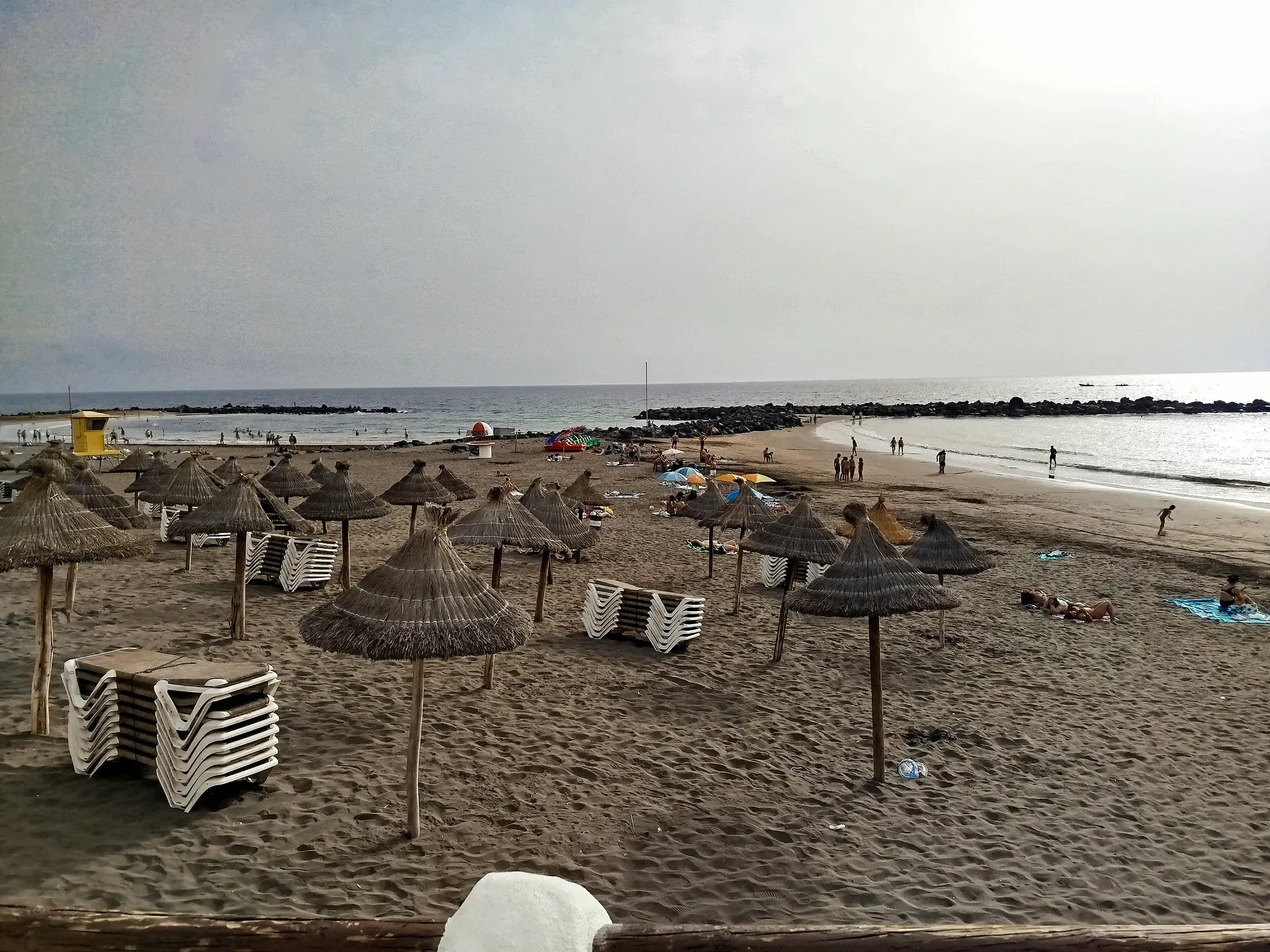
Troya Beach Tenerife is the dark-sand town beach of Playa de las Américas: a strip of volcanic sand with calm, breakwater-sheltered water, lifeguards, showers and a promenade of bars and restaurants right behind it. It suits anyone who wants an easy swim and a lively seafront in the island’s busiest resort zone, and it does not suit anyone after quiet. Entry is free, like every beach in Spain.
The Cabildo’s Turismo de Tenerife page lists the beach as Troya I and II, 650 m long and 20 m wide, with grey volcanic sand. OpenStreetMap draws the main stretch at about 430 m, and another guide gives 400 m by 55 m, so treat it as roughly half a kilometre of beach. The sea is mostly flat, the sand is dark rather than golden, and the beach sits where hotels, shops and clubs press against the promenade.
If you want wide golden sand and a calmer feel, the resort has neighbours that do that better. If you want to be in the middle of things with the sea a few minutes from your hotel lobby, Troya is the practical choice.
Where Troya sits in Playa de las Américas
Playa de las Américas is a purpose-built holiday resort in the south and southwest of the municipality of Arona, right beside the municipality of Adeje. It was built in the 1960s a few miles from the fishing village of Los Cristianos, and today it merges into the continuous tourist zone along the whole southwest coast. Troya lies near the Barranco de Troya ravine, and tourism guides place the beach in Adeje.
Along the seafront the Cabildo names El Bobo, La Pinta, Torviscas and Fañabé as the nearby beaches. Wikipedia lists El Bobo as the northernmost of the resort’s main beaches and Camisón as the southernmost, with Troya between them and Las Vistas toward Los Cristianos. Most of these are man-made beaches that use sand imported from Africa, because the island’s own volcanic sand is dark. Troya keeps the dark sand, so it looks different from its golden neighbours.
For a first-time visitor the useful picture is simple: Troya is the central beach with the most bars and the most people. Playa de Las Vistas toward Los Cristianos and Playa de Fañabé toward Costa Adeje are the calmer options either side.
Troya Beach Tenerife: sand, sea and swimming
The sand is volcanic and dark. Sources describe it as grey (the Cabildo), dark golden or simply dark volcanic, depending on the light. It is fine enough to lie on comfortably. Dark sand holds heat, so on a sunny afternoon you will want sandals between your lounger and the water.
Two stone breakwaters shelter the beach, so waves stay low and the sea entry is flat. That calm water is the main reason people choose Troya. The Cabildo describes the waves as generally gentle, and Wikipedia says the breakwaters keep the water calm with no high waves.
Flags follow the standard Spanish system: green for normal swimming, yellow for caution, red for no entry. Look at the flag and the lifeguard post before you go in, even on a day that looks flat. Spain’s tourism portal inspain.org says a rescue team is on duty and danger warnings are posted.
Blue Flag status is worth knowing about. Troya I and II won the award 19 times from 1988 and have not been on the list since 2016, according to Diario de Avisos. On the 2026 list published by the Blue Flag programme the Tenerife south coast flags are El Duque and Torviscas in Adeje and Las Vistas in Arona. Troya is not among them. Some tourism pages still say Troya holds a Blue Flag, so trust the current list. If the flag matters to you, Playa del Duque and Las Vistas have it.
Loungers, showers, toilets and lifeguards
Troya is an urban beach and the services match. The Cabildo lists foot showers and showers, waste bins with a municipal cleaning service, a tourist information point, public phones, bars and restaurants on or near the beach, sunbeds and parasols for hire, and water activities on the beach itself. Other guides add toilets and changing rooms.
Sunbed and parasol hire is the standard way to spend a day here. Prices change by season and operator, so read the board before you sit down and ask whether the price covers one lounger or a pair with an umbrella. Beaches in Spain are public land, so you can also lay a towel on free sand outside the rented rows. Arrive early if you want a free spot close to the water.
Lifeguards are listed by inspain.org and by other travel guides. The Cabildo page does not mention them, so look for the post and the flag when you arrive rather than assuming hours. In an emergency call 112, the Spain-wide number.
Water activities run from the sand. Guides mention paddling, parasailing, jet skis and a banana boat ride. Check the booth for age limits and prices before you book. The marina of Puerto Colón is about 1 km away, according to inspain.org, which makes it the place to look for boat trips.
Promenade, bars and nightlife
The promenade behind the sand is lined with shops, hotels, apartments, cash machines and restaurants, and a taxi rank is close by. A wooden footbridge leads from the promenade down to the beach. You can go from a lunch table to the water without leaving the seafront, and it also means the beach is never far from music.
Playa de las Américas is described as a centre of nightlife on Tenerife, spread over several areas including the Veronicas strip, the Starco commercial centre and the Patch. Troya is not a club beach in the Ibiza sense, but its position in the middle of the resort makes it a place where daytime beach life drifts into the evening. One travel guide calls the resort the party epicentre of Tenerife, and reviewers describe lively bars and restaurants, especially after dark.
Practical rule: eat on the promenade when convenience matters, and walk a street or two back when price matters.
Crowds, noise and sun
Expect people. inspain.org gives Troya a high occupancy level, and travel guides describe it as busy all year, since Playa de las Américas is the most visited resort on the island. Midday is the busiest time on the sand, and early morning is the quiet window if you want space.
Noise comes mainly from the promenade and the evening bars. If you want a nap on the sand, go in the morning. If your hotel is on the promenade, ask about the room side before you book.
The sun is strong on the south coast and the sand is dark, so bring a hat, sunscreen and water. For wind, swell, sea temperature and UV on the day, check the AEMET beach forecast for Las Américas, the nearest official forecast page for the resort.
Walking to Las Vistas and Fañabé
The promenade is continuous, so the sensible way to explore is on foot. Guides describe it as leading toward Los Cristianos in one direction and toward Costa Adeje and Fañabé in the other. Las Vistas, in the Los Cristianos direction, has golden sand and held a Blue Flag in 2026. It is the one to pick if you want calm water without the crowd of the strip.
In the other direction you reach Playa de Fañabé, a 600 m family beach in Costa Adeje with a flat promenade behind it. Komoot lists a 3.36 km loop from Playa de las Américas that includes Troya, which gives a sense of scale: walking between the resort’s beaches is an easy pavement stroll with cafes along the way.
Wear shoes you can walk in. Paving and dark sand both get hot in summer. If you are comparing beaches rather than walking them all, read the guides to Las Vistas and Fañabé first.
Getting there and parking
On foot is the easiest way. Access points are signposted and the beach is flat. Inter-city buses serve the resort, and the Cabildo’s listing marks bus service as available. Check the TITSA website for the line and stop that match your hotel.
The Cabildo says there is no parking on the beach itself and that you can park nearby. inspain.org says parking is available. If you drive, plan where you will leave the car before you arrive, or take a taxi from the rank close to the promenade. Prices and rules change, so read the sign at the car park.
Families and accessibility
The calm, flat sea entry is the reason Troya works for children. The breakwaters keep the surf low, and a banana boat ride and other water activities add entertainment for older kids. Fine sand is good for digging, but dark sand gets hot at midday, so take shoes for small feet.
Access is good. Both the Cabildo and inspain.org mark the beach as accessible for people with reduced mobility. The promenade is flat, and a footbridge connects it to the sand. Toilets, showers and changing rooms are on site.
For a quieter family day, walk to Fañabé or take the promenade toward Las Vistas. Las Teresitas near Santa Cruz is a very different beach on the other side of the island, a long drive from the south coast.
Who Troya suits and who should skip it
Troya suits:
- Visitors staying in Playa de las Américas who want the sea within a few minutes of the hotel.
- Anyone who wants calm swimming and cafes close at hand.
- People who like a busy atmosphere and plan to stay out in the evening.
- Wheelchair and pushchair users who need a flat approach and nearby facilities.
Skip Troya if:
- You want empty sand or a quiet nap. Go early, or head to Las Vistas or Fañabé.
- A Blue Flag is a must. Choose El Duque, Torviscas or Las Vistas.
- You want golden sand. The beach is dark volcanic.
- You want waves or surf. The breakwaters take them out.
We write about Troya Beach Tenerife
-
 Beach
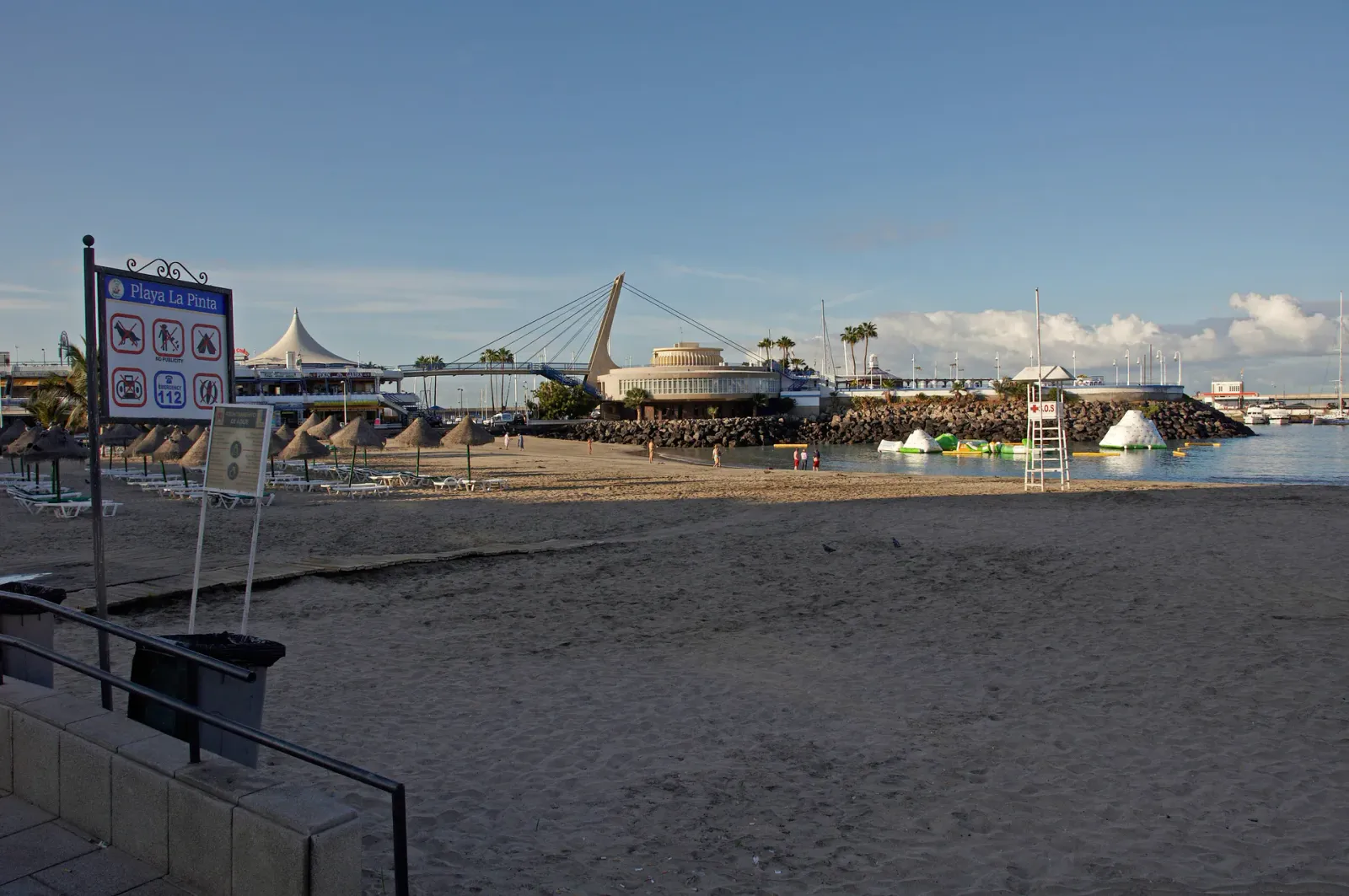
Playa La Pinta Tenerife
Playa La Pinta Tenerife in Costa Adeje: 180 m of calm golden sand beside Puerto Colón
-
 Beach
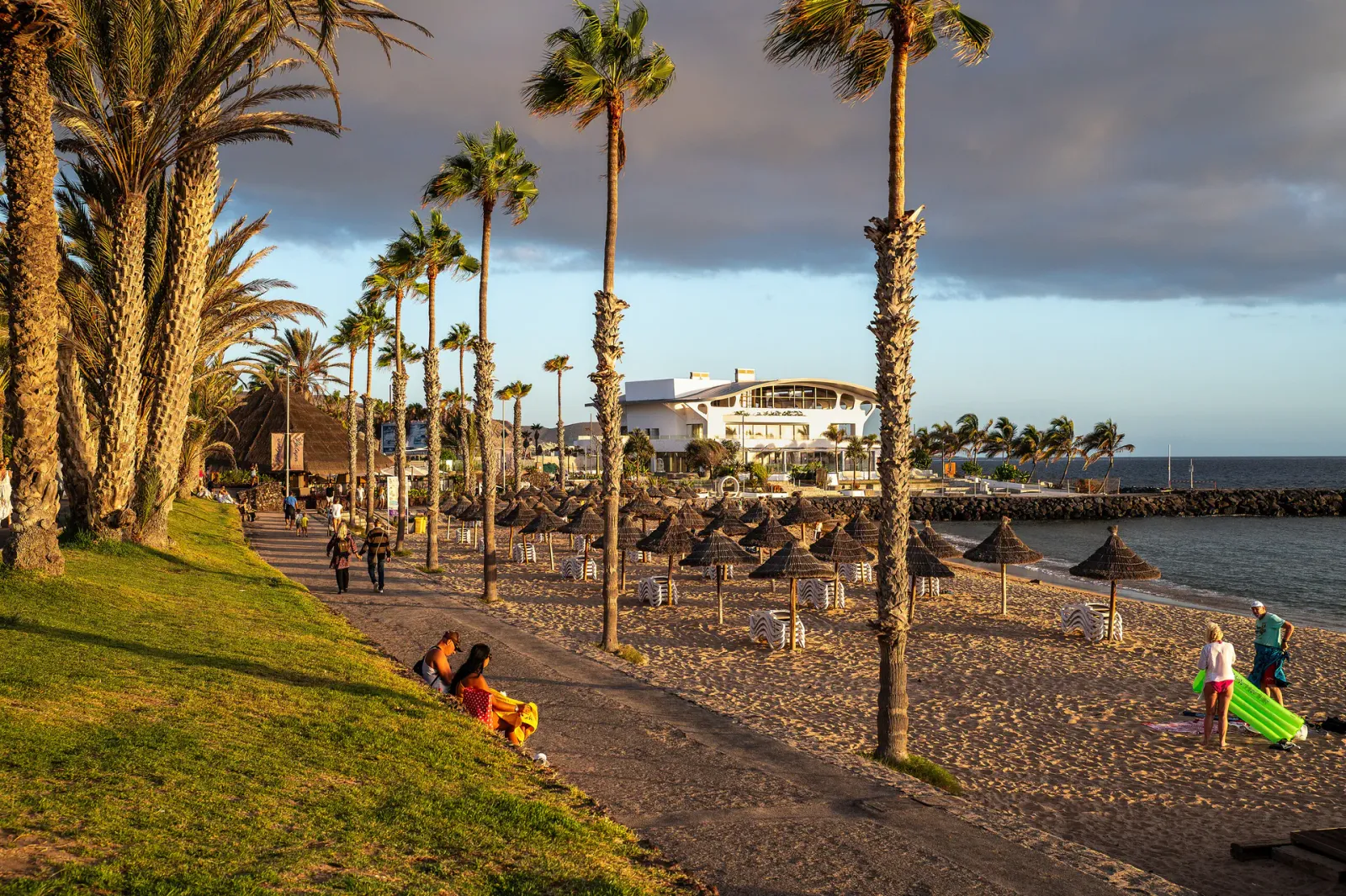
Playa del Camisón Tenerife
Playa del Camisón Tenerife: a 340 m artificial golden-sand beach in Playa de las Américas with calm water
-
 Beach
Fañabé Beach Tenerife
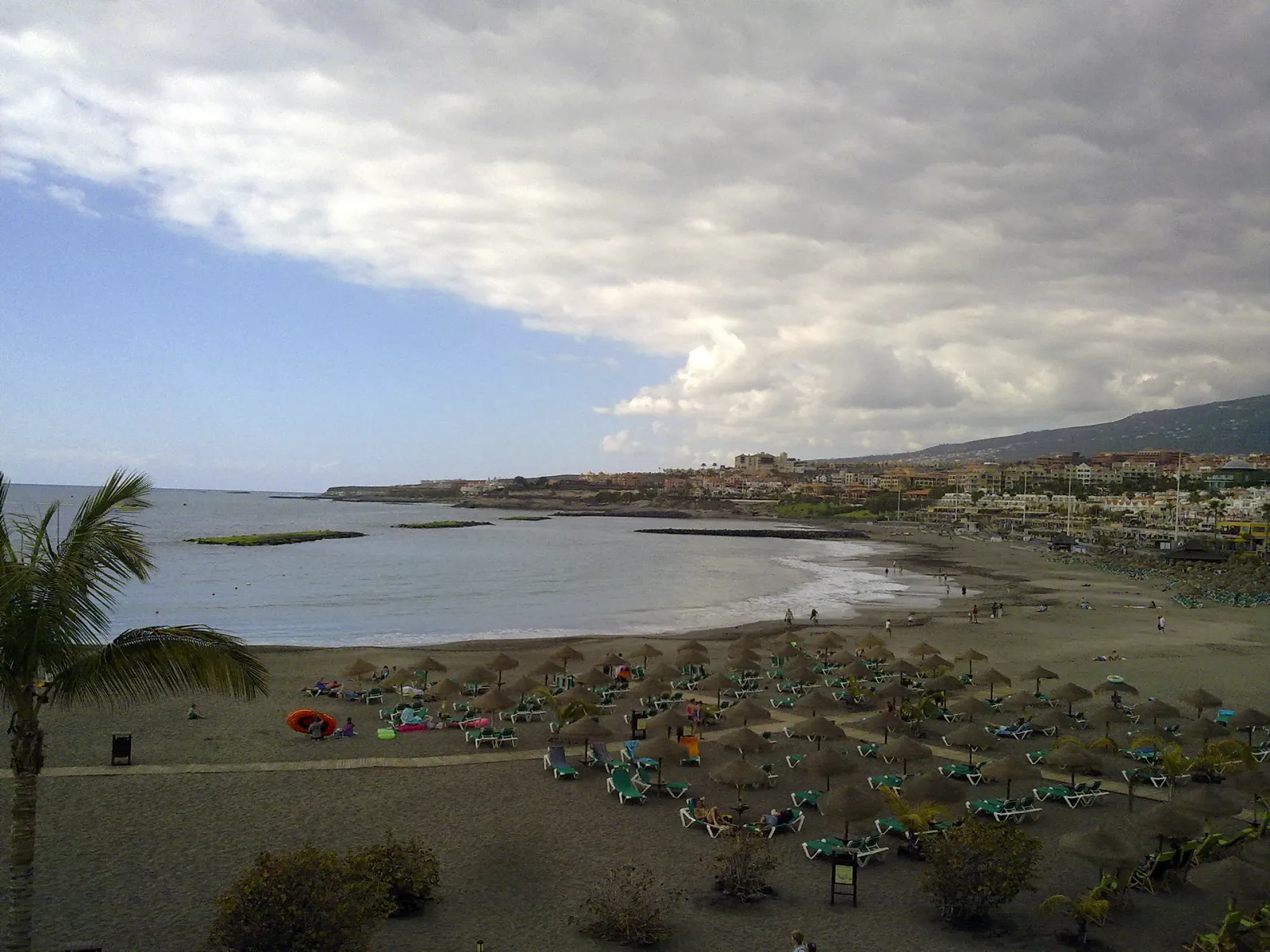
Fañabé Beach Tenerife in Costa Adeje: 600 m of calm golden sand beside Torviscas, with showers, sunbeds
-
 Beach
Playa de Las Vistas
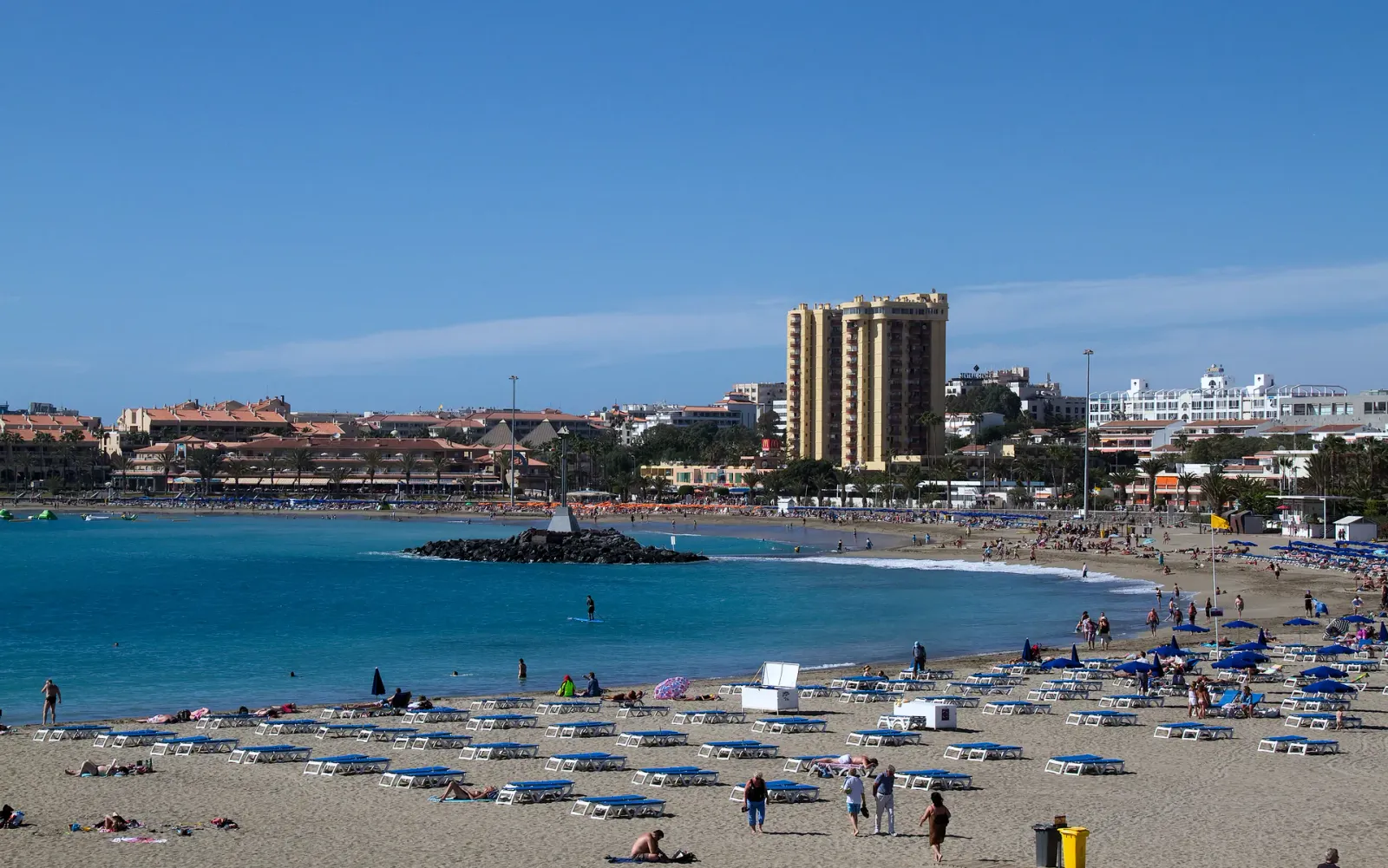
Playa de Las Vistas in Arona: 850 m of golden sand between Los Cristianos and Las Américas
-
 Beach
Playa del Duque, Tenerife
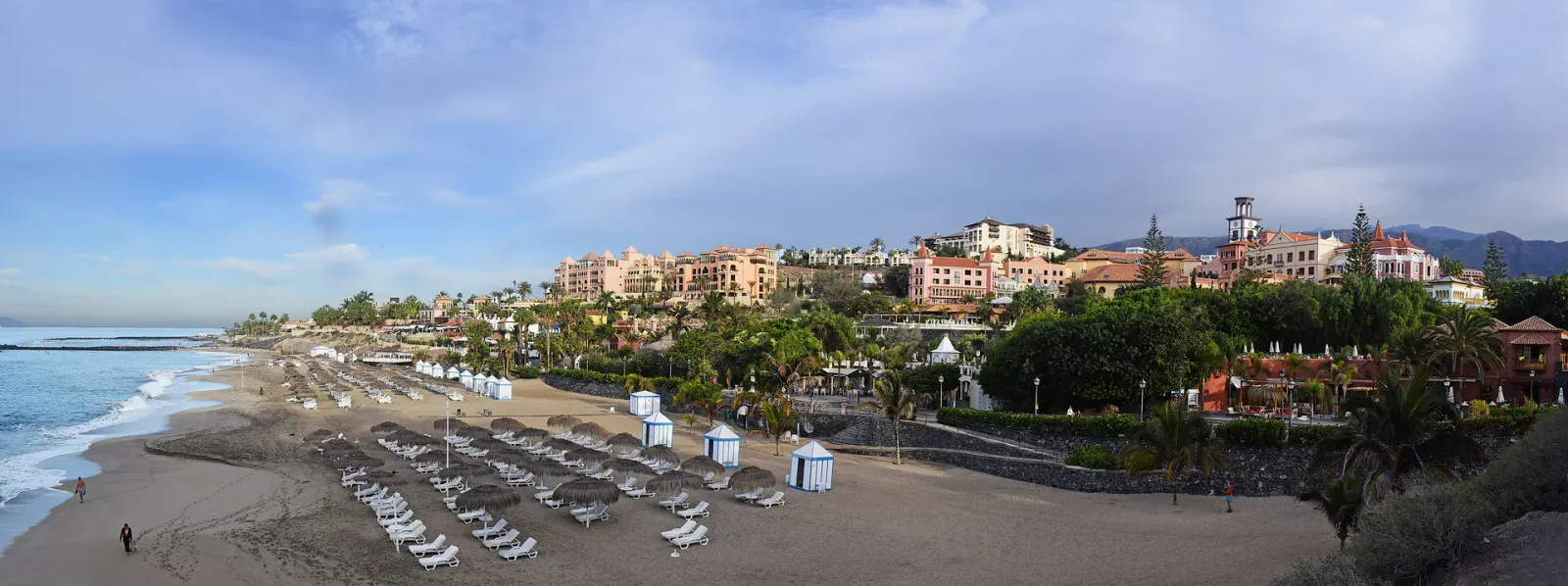
Playa del Duque in Costa Adeje: 390 m of Blue Flag sand, calm water, €20 sunbed sets
-
 Beach
Playa de Los Cristianos
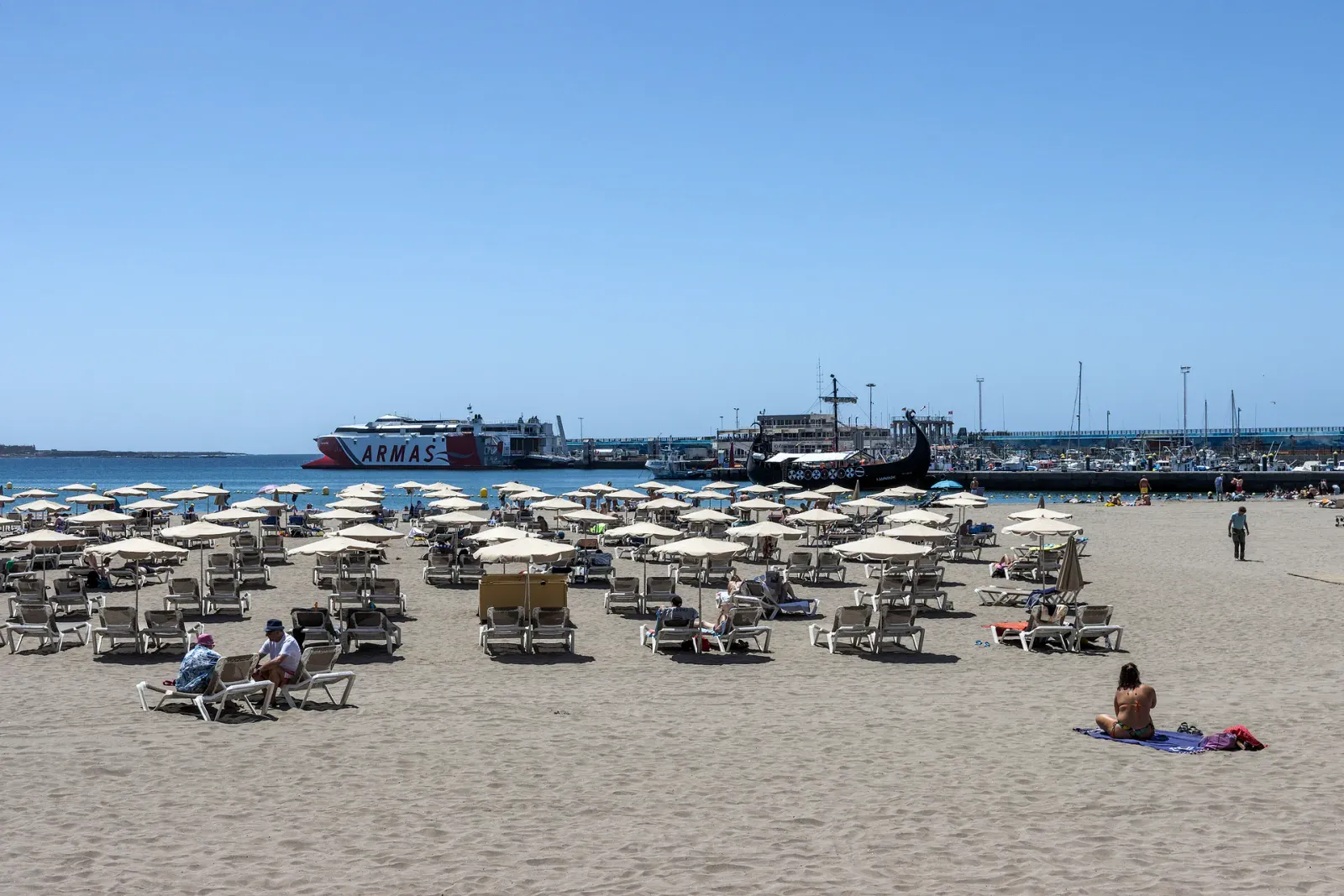
Playa de Los Cristianos in Arona: 345 m of calm golden sand beside the ferry port, free ramps and toilets