
The story
Overview
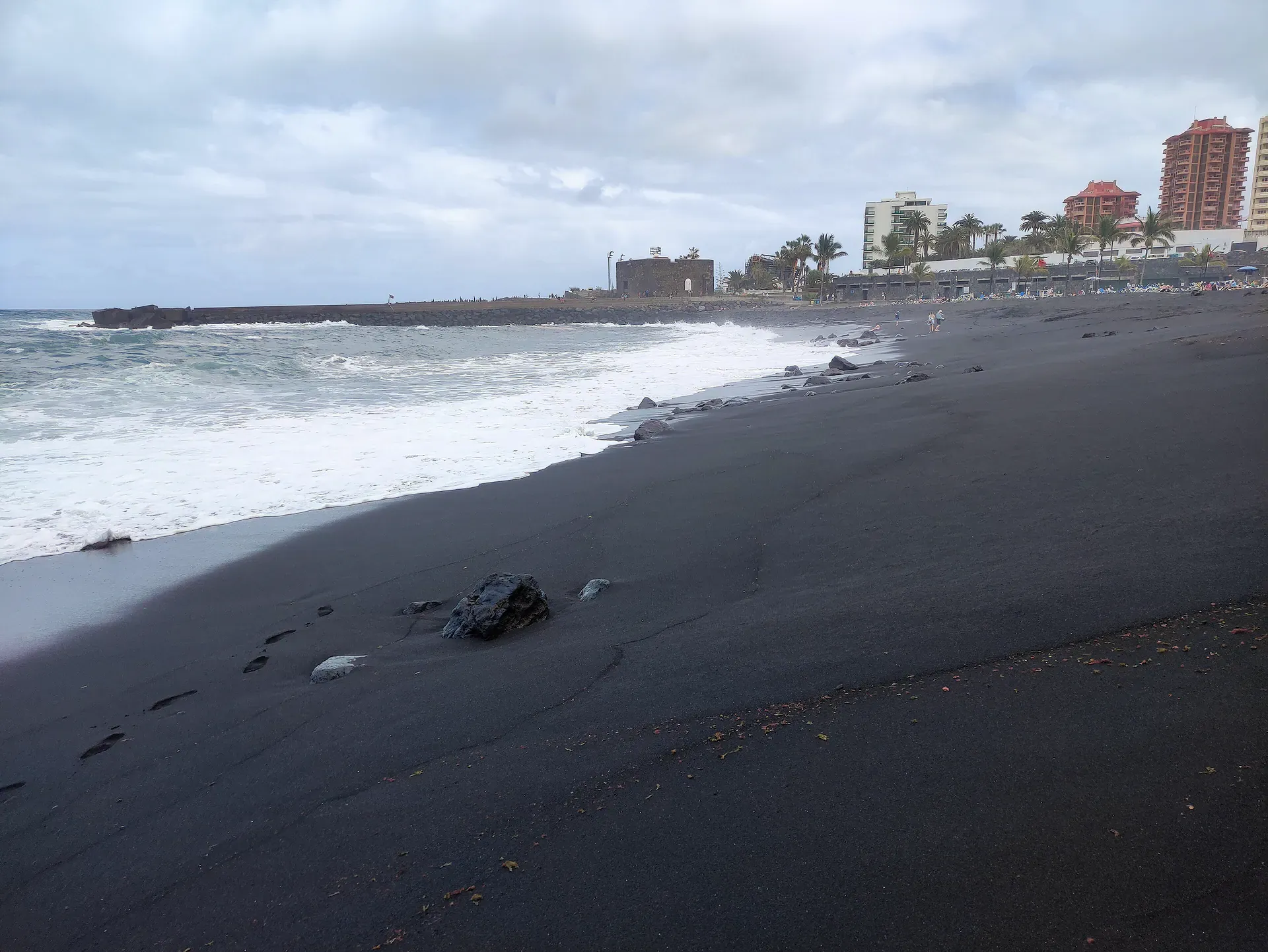
Playa Jardin is worth a visit if you are staying in Puerto de la Cruz and want a free, walkable black-sand beach with gardens. Swimming is the part that needs checking. It is a chain of three dark volcanic coves linked by gardens, stone walls and a promenade designed by the Canarian artist César Manrique. It lies on the western edge of town, a flat 10 to 15 minute walk (about 1 km) from Plaza del Charco, between the 17th-century Castillo de San Felipe and the fishing neighbourhood of Punta Brava.
Breakwaters calm the surf inside the main cove, and the beach has lifeguards, showers, toilets, playgrounds and kiosks. Two things shape any visit. Winter Atlantic swells bring red-flag days when swimming is banned. And the beach was closed to bathing for 350 days between July 2024 and June 2025 over wastewater contamination, and routine tests since then have caused short bans on sections. Check the flag on arrival. If it is red, Lago Martiánez is the backup, a 25 to 30 minute walk east.
Three coves and Manrique’s gardens
Before the early 1990s this was a rough rocky shoreline pounded by North Atlantic rollers. Manrique redesigned it as an urban beach park, using local basalt, terraced gardens of Canarian plants, small waterfalls, grottoes and curved paths. It opened in 1993, a year after he died in a car crash on Lanzarote.
The promenade links three stretches of fine dark sand:
| Cove | Position | Length | Character |
|---|---|---|---|
| Playa del Castillo (Playa Grande) | East end, beside Castillo de San Felipe | 240 to 250 m, 40 m wide | Largest, sheltered by breakwaters, main sunbed rows, showers, lifeguard post |
| Playa Chica (El Charcón) | Middle | About 130 m | Smaller and quieter, between rock outcrops and garden terraces |
| Punta Brava | West end, beside Loro Parque | About 300 m | More exposed to swell, used by local bodyboarders and walkers |
Walking the whole complex is about 700 m on a flat path. The gardens back straight onto the sand and cut street noise, with shaded benches and dragon trees steps from the tideline. The dark basalt sand absorbs heat, and from late morning to mid-afternoon the dry upper beach burns bare feet. Bring flip-flops and a thick towel.
Swimming and water quality
Playa Jardin is the most practical swimming beach on the north coast of Tenerife, as long as the sea and the water tests cooperate on the day.
Swell and flags
The north coast faces the open Atlantic with nothing to block winter storms. Offshore breakwaters in front of Playa del Castillo knock down much of the swell, giving a calmer zone near the shore, while bigger waves break further out and along the open Punta Brava end. Even so, strong northwest swells from November to March build shorebreak fast and pull currents toward the rock groynes. Lifeguards use the Spanish flag system:
- Green: calm, normal swimming.
- Yellow: moderate waves or currents. Stay within your depth and watch children closely.
- Red: swimming prohibited because of dangerous surf, strong currents or a water-quality notice.
Never swim beyond the breakwater line, where open-ocean currents pick up. On a rough winter day, use the seawater pools at Lago Martiánez, or drive east to the sheltered bay at Las Teresitas if you have a car and a few hours.
Water quality
On 1 July 2024 health authorities closed the beach to bathing because of faecal bacteria (E. coli and enterococci) linked to wastewater problems near Punta Brava. The ban lasted 350 days, until 16 June 2025. Since reopening, routine five-day sampling has led to short bans on specific zones such as Playa Grande, lifted once tests came back clean. The beach does not hold a Blue Flag.
The gardens, sand and promenade stay open throughout. If you plan to swim, look at the flag on site and at notices from the Ayuntamiento de Puerto de la Cruz before you change.
Facilities and food
The main Playa del Castillo section has the full set of municipal services.
- Sunbeds and parasols cost about €3 each per day. Posted boards on the sand give the current rates.
- Toilets, showers, foot taps and changing areas run along the promenade.
- Paved ramps and level paths lead from the gardens to the beach for pushchairs and wheelchairs.
- Playgrounds and sports areas sit in the park behind the sand.
For food, kiosks (quioscos) along the garden walk sell beer, barraquito (the layered Canarian coffee), ice cream, sandwiches and tapas, and several stay lively at sunset on weekends. Punta Brava has modest local bars and traditional kitchens away from the resort strip. For more choice, walk 10 minutes east to La Ranilla and Plaza del Charco, where dozens of mid-range seafood places and tapas bars cluster.
North coast weather
Visitors who stay in Costa Adeje and drive north in shorts are often surprised by grey skies. Moist northeast trade winds hit the northern slopes and form a cloud band locals call the panza de burro (donkey’s belly), leaving the south dry and bright while the Orotava Valley stays cooler and cloudier. Open-Meteo data for 2015 to 2024 shows the gap.
| Period | Puerto de la Cruz highs | Rain, Puerto de la Cruz | Rain, Los Cristianos | North sea temp |
|---|---|---|---|---|
| Winter (Dec to Feb) | 20 to 22°C | 46 to 76 mm, 7 to 9 days a month | 10 to 16 mm, 1 to 3 days | 20 to 22°C |
| Summer (Jun to Aug) | 24 to 29°C | 7 to 28 mm, 2 to 8 days | 1 to 10 mm, 0 to 2 days | 23 to 24°C |
| Autumn (Sep to Nov) | 24 to 27°C | 44 to 55 mm, 7 to 11 days | 11 to 14 mm, 1 to 3 days | 23 to 24°C |
July, August and September give the sunniest skies, least rain and calmest sea, and the sea peaks at about 24°C in September and October. Even in summer, cloud often sits over town in the morning and breaks up by midday. In winter, afternoons hover around 20 to 21°C, fine for walking and sunbathing between showers. Pack a light windbreaker, and on grey days think about Los Gigantes or the south coast, which are usually in clear sun.
Getting there, parking and buses
On foot from central Puerto de la Cruz it is easier than driving. From Plaza del Charco, walk west through La Ranilla or along the harbourfront past the fishing pier and Castillo de San Felipe: about 1 km, 10 to 15 minutes. From the bus station (Estación de Guaguas) it is 1.1 to 1.3 km, 12 to 16 minutes.
Parking
There is no large car park on the beach. Options:
- Street bays. White-lined bays behind the beach and toward Punta Brava are free. Blue-lined Zona Azul bays need a ticket on weekdays and Saturday mornings. Solid yellow lines mean no parking, with fines up to €200. These fill fast on sunny afternoons and weekends.
- Explanada del Muelle. A large free open-air lot near the old harbour, open 24 hours, 10 to 15 minutes’ walk from Playa del Castillo. Sections close during fairs and carnival.
- Paid garages. Underground parking at Plaza de Europa costs about €1.55 per hour with a €15 daily cap.
By car, Tenerife North Airport is 25 to 30 minutes away (25 to 27 km), and Tenerife South Airport or Costa Adeje is 60 to 75 minutes.
Buses
TITSA intercity lines mostly end at the Puerto de la Cruz bus station, a 12 to 16 minute walk from the sand.
- Line 30 from Tenerife North Airport, about every 30 minutes on weekdays, 25 to 30 minutes, €4.75.
- Lines 102 and 103 from Santa Cruz and La Laguna along the TF-5. Line 103 runs direct.
- Line 343, an express from Tenerife South Airport, Los Cristianos and Costa Adeje, with 4 to 5 round trips a day. The single from the south airport is €13.55.
- Urban line 381 stops at the beach on its way between Plaza Reyes Católicos and Punta Brava.
Nearby sights
- Castillo de San Felipe. A compact 17th-century fortress at the east entrance to the beach, with free exhibitions.
- Lago Martiánez (2.2 to 2.5 km east, 25 to 30 minutes’ flat walk). Manrique’s seawater lido, open 10:00 to 18:00 (to 19:00 from 1 July to 30 September). Adults pay €7, children aged 4 to 10 pay €4, under 4s are free, and a sunbed is included. It is the natural plan B when Playa Jardin flies a red flag.
- Botanical Garden (Jardín de Aclimatación de La Orotava, 2.5 to 2.8 km east in La Paz). Founded in 1788, about 20,000 m² of large fig trees and palms. Open daily 09:00 to 18:00, €3. The walk is uphill, so take a taxi up and stroll back down.
- Loro Parque, next to the Punta Brava end of the beach.
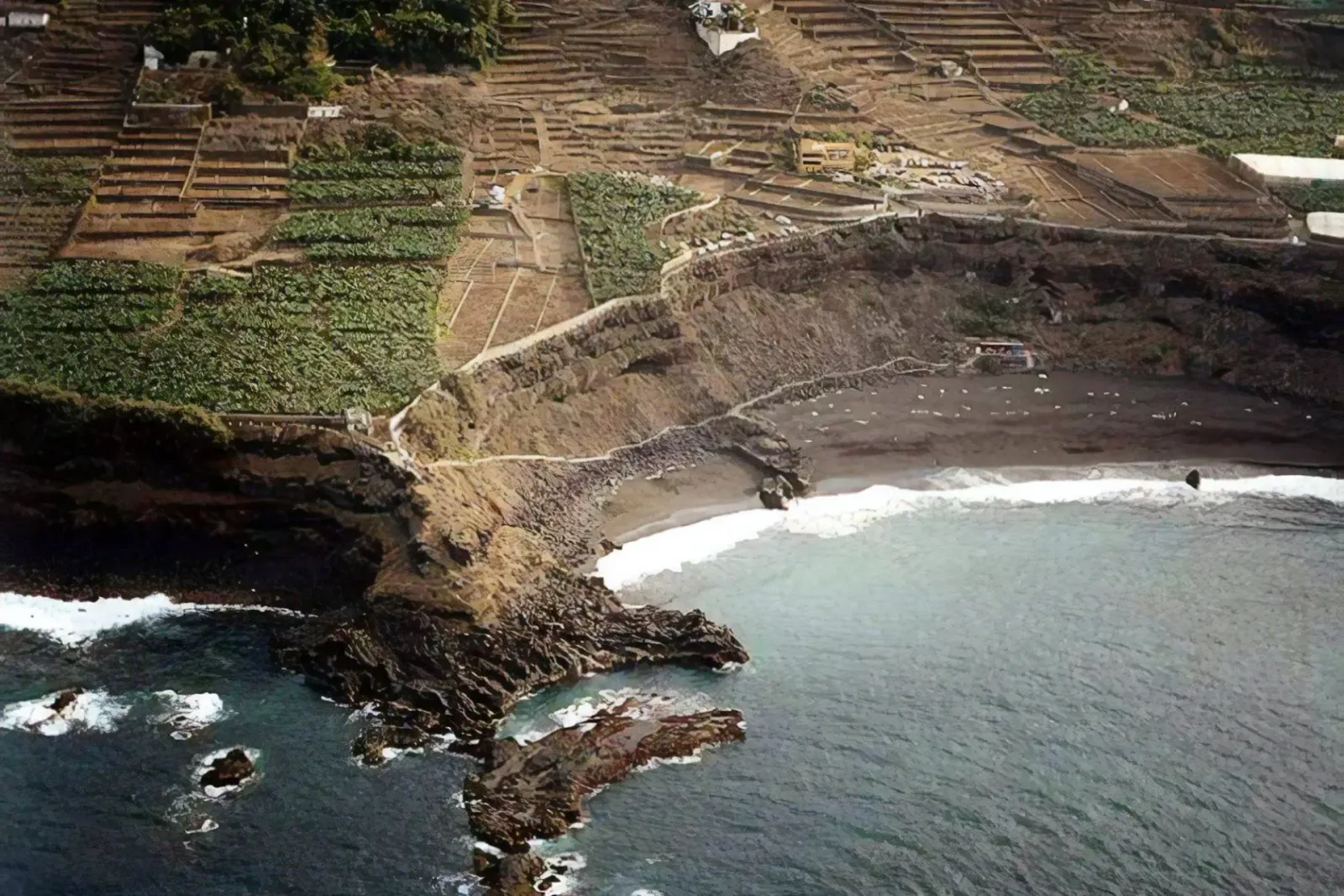
With a car and a taste for wilder volcanic scenery, Playa El Bollullo in La Orotava has no promenade or kiosks, and it has open surf. See all the options on the beaches page.
Who should go and who should skip it
Go if you are staying in Puerto de la Cruz, like Manrique’s design, or have a family that needs a paved promenade, playgrounds and toilets on green-flag days. The beach is free, walkable and wider than the small coves in the old town.
Skip it, or have a backup plan, if you only have one beach day in winter and want guaranteed sun, clear water and calm swimming without checking flags and water notices. Dark sand also stirs up and cuts visibility, so snorkellers and surfers are better served elsewhere.
We write about Playa Jardin Tenerife
-
 Hike
Rambla de Castro Tenerife
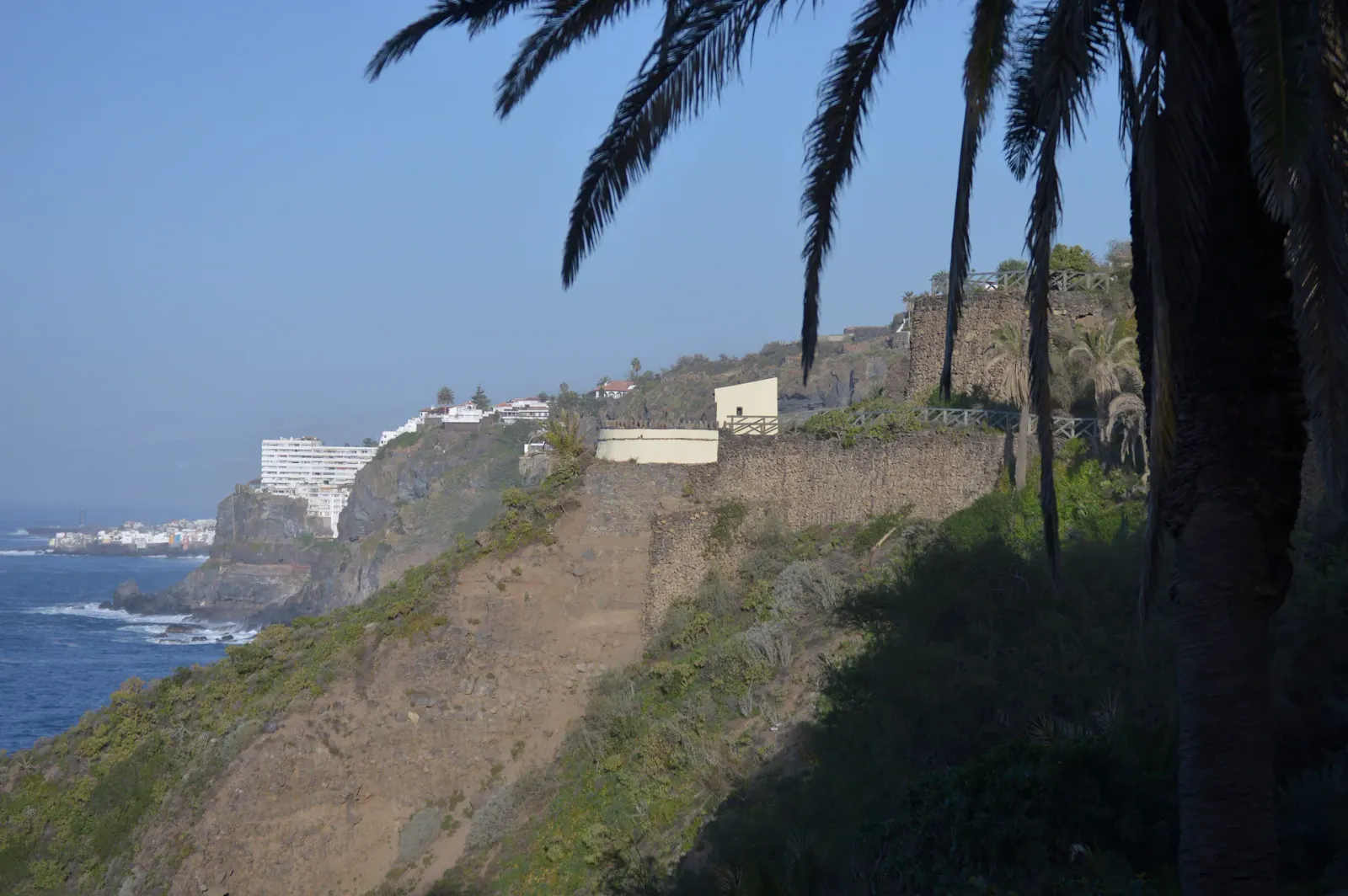
Rambla de Castro walk in Los Realejos: 4.2 km one way, about 1 h 30, easy and free, past a palm grove
-
 Beach
Martiánez Tenerife
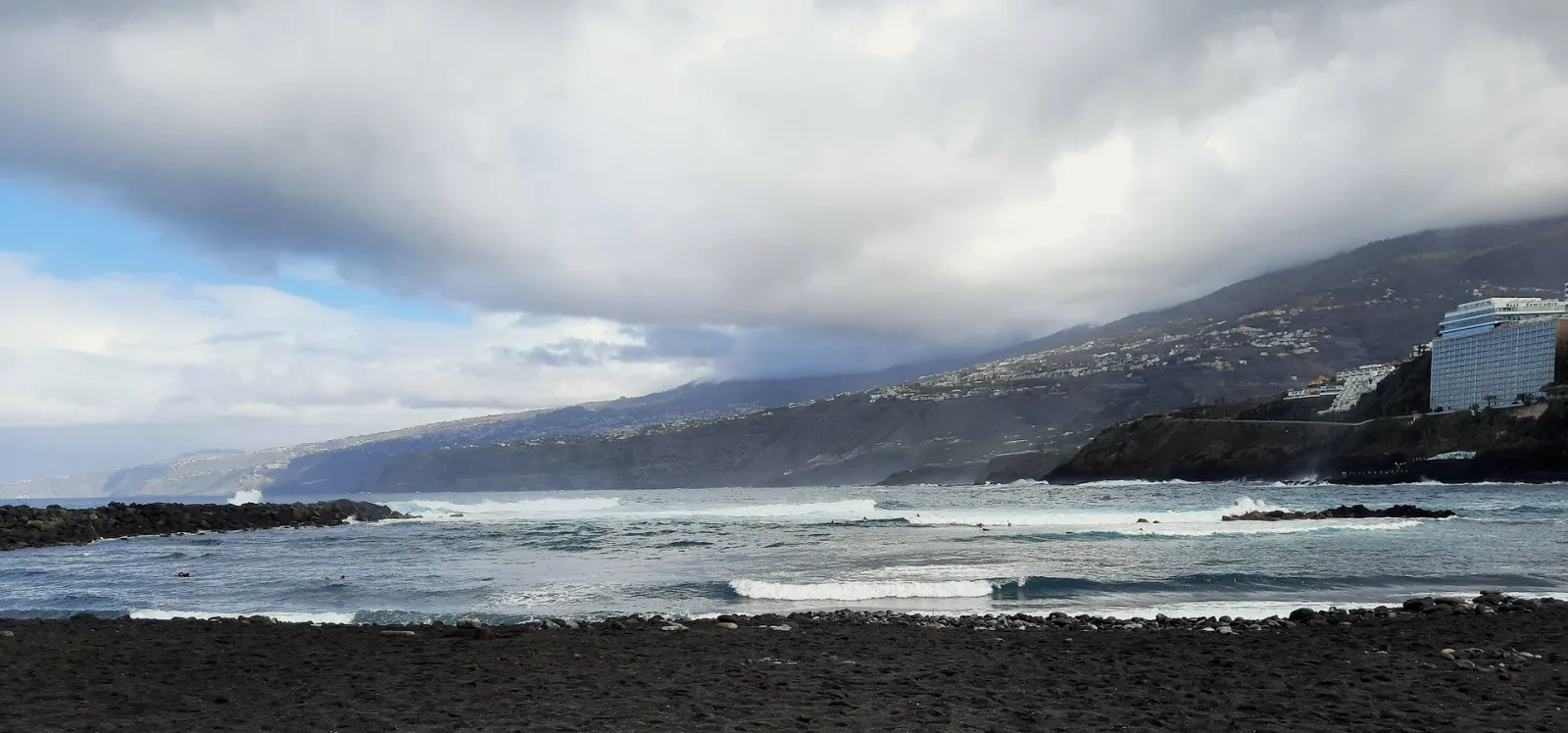
Martiánez Tenerife in Puerto de la Cruz: a 350 m black sand beach with surf, next to the César Manrique lido
-
 Beach
Playa El Bollullo
Playa El Bollullo in La Orotava, Tenerife: 2026 car-park closure, coastal walk from Puerto de la Cruz
-
 Beach
Playa de Benijo
Playa de Benijo in Anaga, Tenerife: stair closure status, rough Atlantic currents, TF-134 drive, Bus 946