
The story
Overview
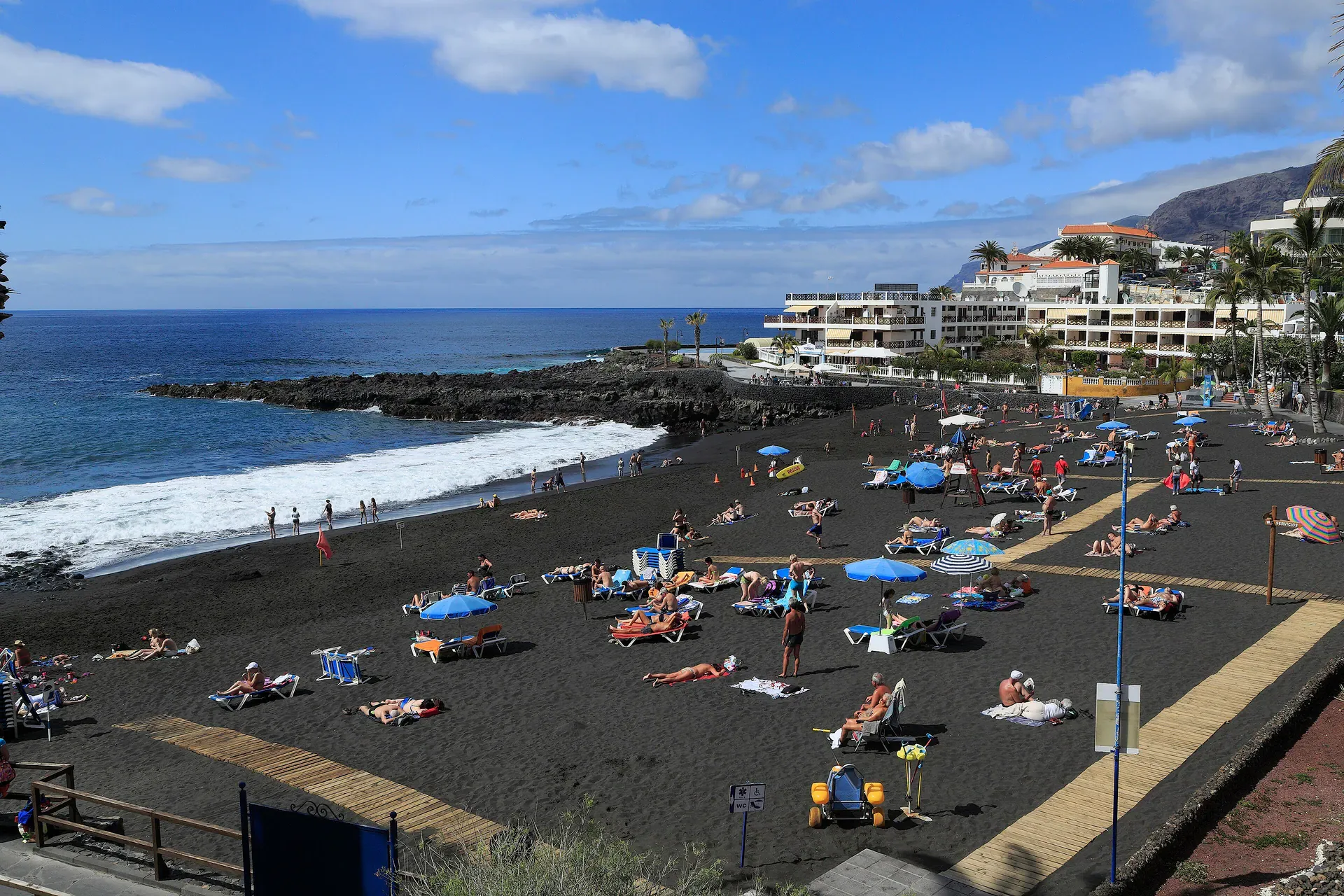
Playa de la Arena is the easy black-sand beach on Tenerife’s west coast. It is a 120 m cove of fine black volcanic sand in Puerto de Santiago, in the municipality of Santiago del Teide, about 2 km south of Los Gigantes. It suits anyone who wants a full beach afternoon with facilities on hand: lifeguards, toilets, showers, sunbed hire, a wide wheelchair ramp and seafront restaurants on Avenida Marítima right behind the sand. Entry is free. Waves are rated moderate, the sea stays around 20 to 24°C all year, and clear evenings show La Gomera across the channel.
It has easier access and a longer street frontage than the smaller cliff-base cove at Los Gigantes beach. The dark volcanic sand is a different look from the imported pale sand at Playa del Duque in the south. Expect four trade-offs. The cove fills quickly after 10:00, street parking near the sea disappears early, the black sand burns bare feet by midday, and Atlantic swell can build a sharp shorebreak.
Location in Puerto de Santiago, parking and buses
The beach lies in central Puerto de Santiago, directly below Avenida Marítima and closed at its southern end by Calle Punta Negra. By road it is about 42 km (45 minutes) northwest of Tenerife South Airport via the TF-1 and TF-47, 23 km (20 to 25 minutes) from Costa Adeje and 27 km (25 to 30 minutes) from Los Cristianos. From Puerto de la Cruz it is about 55 km (60 to 65 minutes) via the TF-5 and TF-82.
Parking
No car park sits beside the sand. Drivers use marked roadside bays along Avenida Marítima and the sloping residential streets behind the apartments. Those fill fast between 09:30 and 15:00 in the winter sun season (November to March) and in July and August.
| Option | Where | Walk to the sand | Note |
|---|---|---|---|
| Street bays | Avenida Marítima and side streets uphill toward Calle Punta Negra | 1 to 5 min | Free where unmarked, tight after 09:30 on sunny days |
| Parking El Mirador | Covered garage on Calle la Hondura | 10 to 15 min on foot | Fallback when coastal streets are full, handy if you are walking on to Los Gigantes |
If Avenida Marítima is jammed at midday, skip a second lap. A 10-minute walk down from the garage or an upper street is quicker than waiting for a seafront space, though you climb back afterwards.
Bus
Buses stop on Avenida Marítima, a short flat walk from the beach ramps.
- TITSA line 473 links Los Cristianos, Estación Costa Adeje, Adeje, Callao Salvaje, Playa San Juan, Puerto de Santiago and Los Gigantes.
- Line 477 runs direct from Estación Costa Adeje via the TF-1, TF-46, Playa San Juan, Alcalá and Avenida Marítima to Los Gigantes.
- Line 325 links Puerto de la Cruz, Icod de los Vinos and Santiago del Teide with Los Gigantes, Playa de la Arena and Varadero.
- Lines 461 (from Arguayo) and 462 (from Guía de Isora) connect nearby inland towns to the coast.
From the airport without a car, take line 40 to Estación Costa Adeje (about every 30 minutes in the daytime, €3.20 to €3.70) and change to line 477 or 473. TITSA buses accept contactless cards and small cash. On interurban routes, tap on at the front door and tap off at the rear so you are charged only for the stops you rode. For several trips, a ten+ card costs €2 plus the credit you load.
Playa de la Arena Tenerife: black sand, water and waves
Turismo de Canarias lists the beach at 120 m long (OpenStreetMap traces about 150 m between the outer basalt outcrops) as an urban volcanic-sand beach with moderate waves and free, easy access. For a black-sand beach in the west without mountain switchbacks, it is the easiest to reach.
Dark basalt sand absorbs heat. The dry upper band turns scalding between late morning and late afternoon, especially from May to October. Keep sandals on along the promenade and walkways until you reach damp sand at the waterline.
Swimming conditions and surf
Rock headlands enclose both ends of the cove and blunt some of the wind, but the bay faces open Atlantic swell with no breakwater. Calm mornings bring clear water and easy swimming. When swell builds, the steep profile makes waves dump right at the shore, and side currents can push swimmers toward the flanking rocks.
On-site municipal warnings cover strong currents, rough sea and slippery volcanic rock. Check the lifeguard flag before you wade in: green is normal bathing, yellow is caution, red closes the water. Stay off the black rock points on either side whenever surf builds.
Water temperature and snorkelling
Sea temperature averages about 20 to 21°C from February to April, 21.5 to 23°C from May to July, and 23.5 to 24.4°C from August to November.
On flat, clear mornings the submerged basalt blocks along both flanks attract reef fish. Turismo de Canarias and Santiago del Teide tourism both list the bay as a shore entry for snorkelling and diving, with dive centres in Puerto de Santiago. Bring your own mask and fins, and skip the rock edges when there is a yellow flag or surge.
Sunset spot and La Gomera views
The beach looks west-southwest across the channel to La Gomera, whose ridge stands 31 to 44 km offshore. On clear afternoons the island is crisp on the horizon behind the surf and the dark sand.
From about October to February the sun sets behind or beside La Gomera. From March to September it sets farther north, into open ocean to the right of the island, while late light washes the island’s cliffs.
You do not need a restaurant booking for the view. The low wall along Avenida Marítima has a clear line across the cove, and the sand cools after 17:00 when the midday crowd leaves. For a higher view over the Los Gigantes cliffs and the sunset, go to the Mirador de Archipenque on the TF-454 above Puerto de Santiago.
Facilities, beach rules and nearby restaurants
Turismo Santiago del Teide lists four quality and environmental certifications for the beach: Q for Tourism Quality, EMAS, ISO 14001 and ISO 9001. It does not list a Blue Flag.
Services and accessibility
The lifeguard and rescue service is run by West Coast Rescue, S.L., and 112 covers emergencies. Public toilets, showers and foot washes sit at the back of the beach beside Avenida Marítima, next to a beach bar and the tourist information point.
Sun loungers and parasols are rented on the central sand. Turismo de Canarias advises arriving early for a sunbed, as the front rows go first, and open public sand stays free for your own towel and umbrella. Access for reduced mobility is good: a wide concrete ramp from Avenida Marítima, walkways across the sand, adapted toilets, showers and loungers, and amphibious chairs run by the lifeguard team for assisted bathing.
Beach rules
Santiago del Teide enforces a coastal ordinance (Official Bulletin No. 125 of 18 October 2021). It bans smoking and vaping on the beach, dogs and other pets, ball games, contact sports, fishing, loud music, campfires, camping and taking sand, pebbles or shells. Staff enforce the no-smoking and no-ball-game rules, so step up to the street promenade if you smoke.
Restaurants and cafes
Avenida Marítima has cafes, ice-cream counters, mini-markets, pharmacies and sea-view terraces right behind the beach. You can rinse off at the showers and sit down two minutes later.
Restaurante Pancho (Avenida Marítima 26) stands at the northern corner overlooking the sand. It is a family-run Canarian fish and rice restaurant open since 1963, with a shaded ficus terrace. Dinner tables fill up, so book ahead rather than walking in at sunset. Other bars and restaurants along the avenue serve grilled fish, tapas and pizza at standard resort prices.
Walk to Puerto de Santiago, Los Gigantes and Playa de Los Guíos
The coastal walk north is about 2.0 to 2.5 km each way, 30 to 45 minutes at an easy pace, and stays close to the sea. It turns a short beach visit into a half-day outing.
Playa Chica
About 800 m north along Avenida Marítima (10 to 15 minutes) is Playa Puerto de Santiago, known as Playa Chica. This 60 m dark-sand cove beside the old fishing harbour is more sheltered than La Arena and popular with local families, with traditional sea-view restaurants close to the water. It is posted as an unguarded zone with no lifeguard.
Paseo de La Hondura to Los Gigantes
North of Puerto de Santiago, streets lead onto Paseo de La Hondura, a cliffside walkway above the surf where the basalt walls of Los Gigantes rise up to 600 m from the ocean. The path ends at Puerto Deportivo Los Gigantes (Calle Poblado Marinero) and Playa de Los Guíos.
Playa de Los Guíos is about 130 m of black sand right under the cliff wall, with lifeguards, adapted access and kayak launches next door. A good day is a swim and lunch at La Arena, a late-afternoon walk north for the cliff views and the marina, then bus 473 or 477 back south to skip the climb.
With a hire car, La Arena pairs well with two big walks in the same municipality: the lava and pine loop on the Chinyero volcano and the canyon descent of the Masca Gorge. Dropping to the coast afterwards gives you a shower, food and a sunset in one stop.
Boat trips from nearby Los Gigantes marina
Boats do not launch from the sand at La Arena because of the shorebreak. Every whale-watching cruise, sailing charter and guided kayak tour leaves from Puerto Deportivo Los Gigantes, 2 km north. It is 30 to 45 minutes on foot, 5 to 10 minutes by car or taxi, or a few stops on buses 473, 477 or 325.
Just outside the harbour is the Teno-Rasca marine strip, described as Europe’s first recognised Whale Sanctuary, home to resident short-finned pilot whales and bottlenose dolphins. Most trips go offshore to look for them, then run under the Los Gigantes cliffs and stop in a sheltered bay for a swim.
Choose an operator with the Canary Islands Barco Azul (Blue Boat) licence that signs Santiago del Teide’s Sustainability Charter. Licensed boats keep approach limits and forbid feeding, touching or swimming with whales and dolphins. Operators on the municipal list include Flipper One, Marítima Acantilados, Picarus Sailing, Whale Wise Watching, Blue Dream and Teno Activo, which also runs coastal kayak tours.
Bring a light windproof jacket even on warm days, plus a hat, water and reef-safe sunscreen. Confirm departure times and sea conditions with the operator before heading to the marina.
Best time to visit and crowd levels
West and southwest Tenerife sit in the dry lee of the central ridge, so La Arena is warm and sunny all year. Daytime highs are about 21°C from January to March and 26 to 27°C in July and August, with few wet days outside occasional winter showers.
| Season | Months | Weather and sea | Crowds |
|---|---|---|---|
| Winter sun | November to March | About 21 to 24°C, sea 20 to 23°C, occasional swell | High, sun sets near La Gomera |
| Spring | April to June | About 21 to 24°C, sea 21 to 22.5°C | Moderate to high |
| Summer | July and August | About 26 to 27°C, sea 23 to 24°C, very hot sand at midday | High, European and Spanish holidays |
| Autumn | September and October | About 25 to 26°C, warmest sea at about 24°C | Moderate, the best window for swimming and coastal walks |
The hour matters more than the month. Turismo de Canarias rates crowd density here as high, and a 120 m cove fills once hotel guests finish breakfast. Arrive before 09:30 for easy street parking, the first choice of sunbeds, cooler sand and calmer morning water. From 11:30 to 15:30 towel space shrinks, UV peaks and the dry sand burns. After 17:00 day trippers leave and the sunset light spreads over the bay.
Who Playa de la Arena suits and who should skip it
| Traveller | Verdict | Why |
|---|---|---|
| Black-sand and sunset seekers | Go | Natural dark sand, La Gomera views, easy promenade vantage points |
| Reduced mobility | Go | Wide ramp, sand walkways, adapted toilets and loungers, amphibious chairs |
| Walkers and Los Gigantes day trippers | Go | 2.0 to 2.5 km coastal walk to Playa Chica, the marina and Los Guíos |
| Snorkellers and casual divers | Go | Rocky flanks with clear water on calm mornings, dive centres nearby |
| Families with school-age kids | Go, with care | Facilities, lifeguards, food and buses, but watch the flags |
| Toddlers and nervous swimmers | Skip | Moderate waves and steep shorebreak with no breakwater shelter |
| Solitude seekers | Skip | A compact town beach among apartments, shops and traffic |
If you need flat, breakwater-sheltered water for toddlers, or an undeveloped cove with no buildings behind it, this is the wrong beach. For calm golden sand protected from swell, head south to Playa del Duque or Playa de Las Vistas.
We write about Playa de la Arena Tenerife
-
 Beach
Los Gigantes Beach (Playa de Los Guíos)
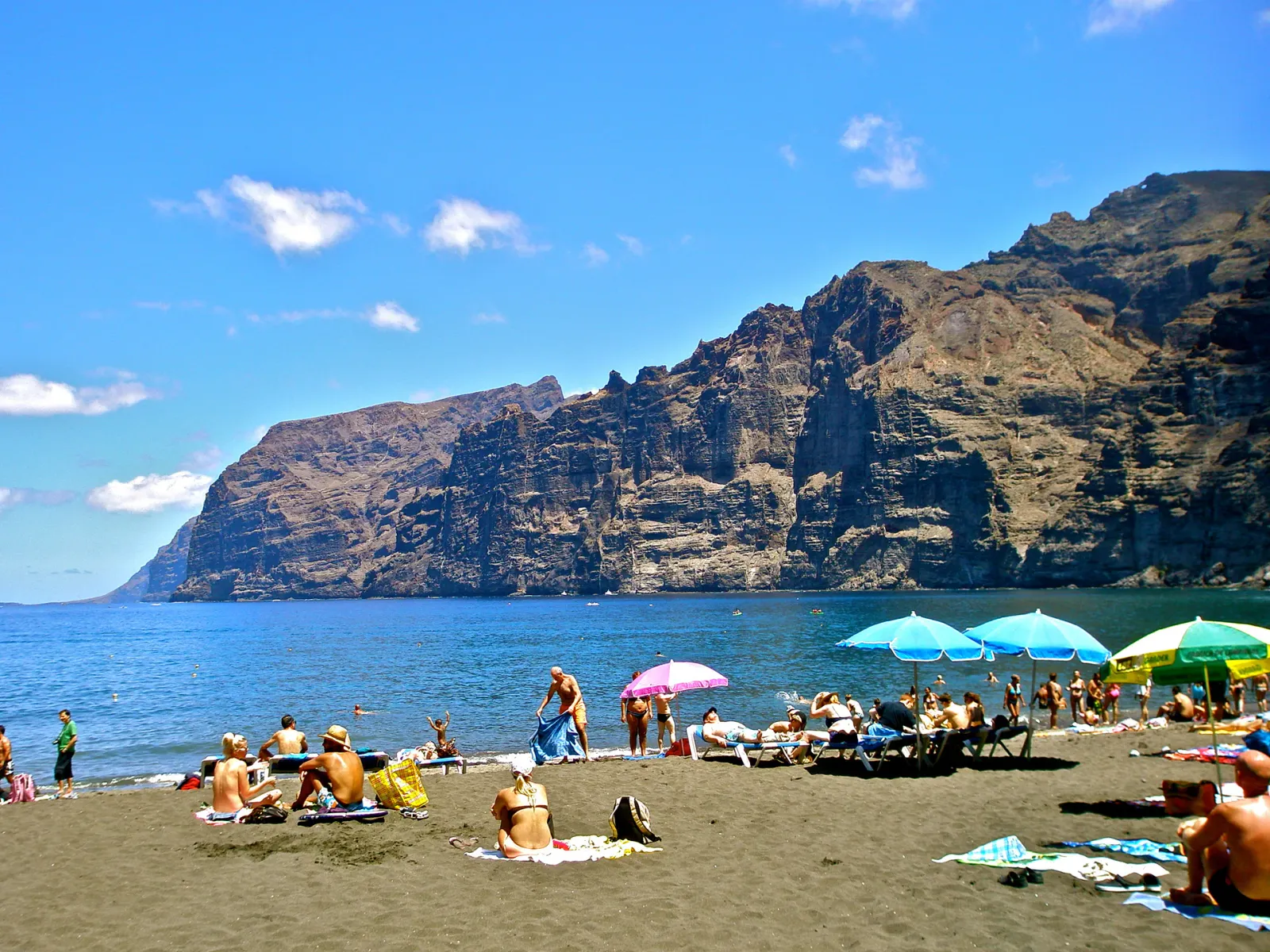
Los Gigantes beach (Playa de Los Guíos): 130 m black sand beneath 600 m cliffs, swimming safety
-
 Beach
Playa San Juan Tenerife
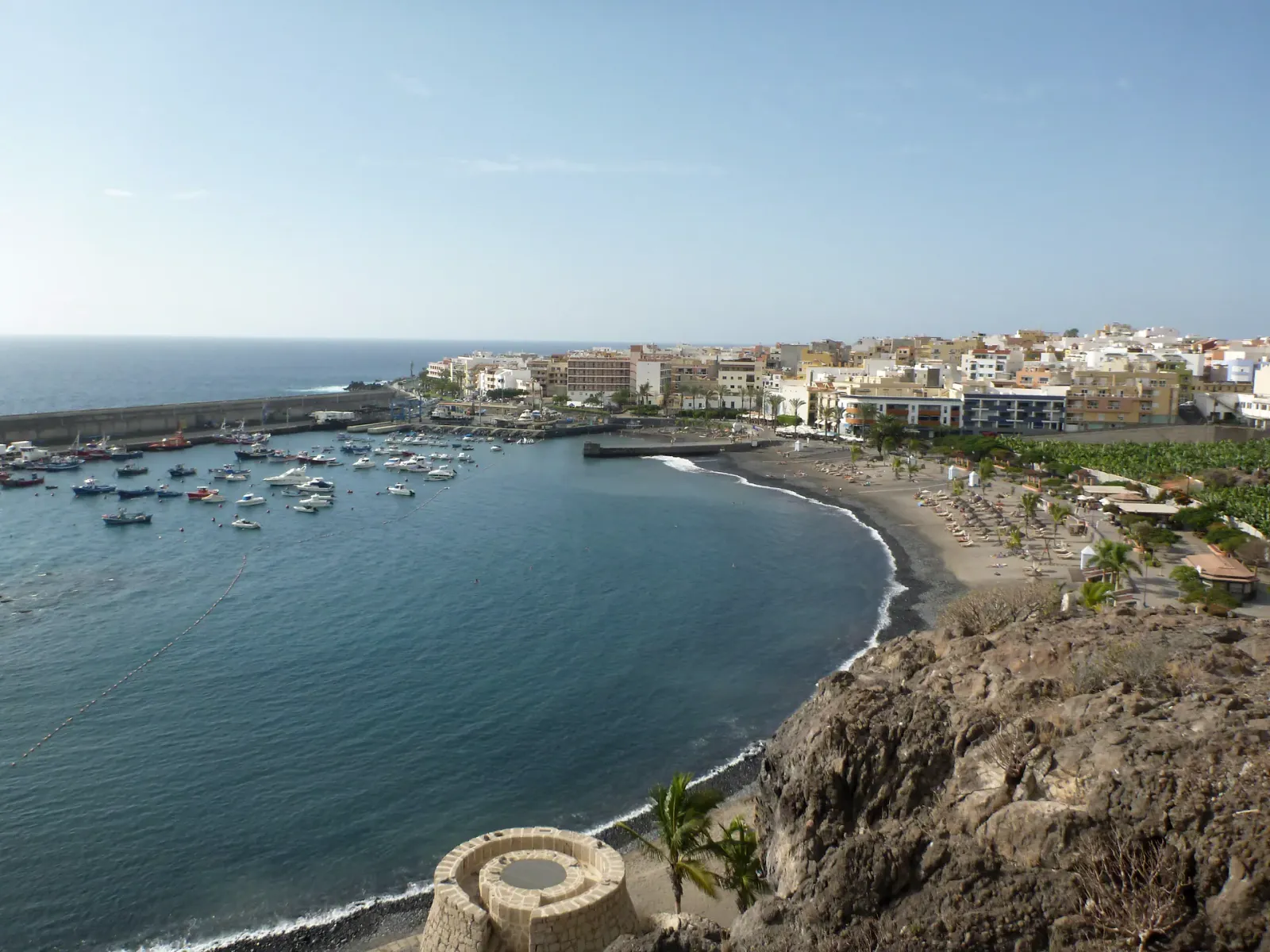
Playa San Juan Tenerife in Guía de Isora: 360 m of dark sand sheltered by the harbour, Blue Flag listing
-
 Hike
Chinyero Volcano Loop
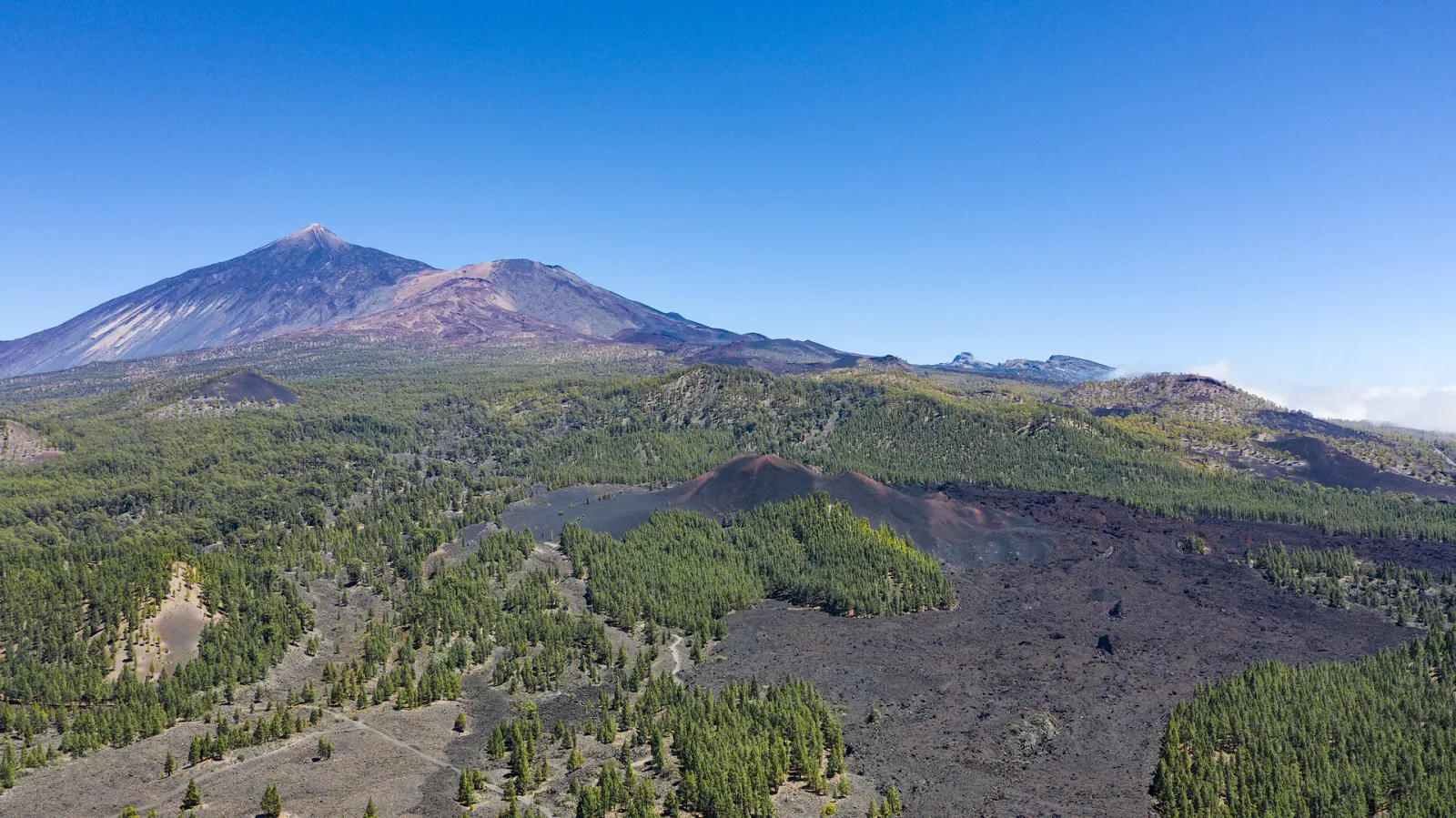
Chinyero volcano circular walk off Tenerife's TF-38: free 6.5 km loop through pine forest and 1909 lava…
-
 Beach
Playa del Duque, Tenerife
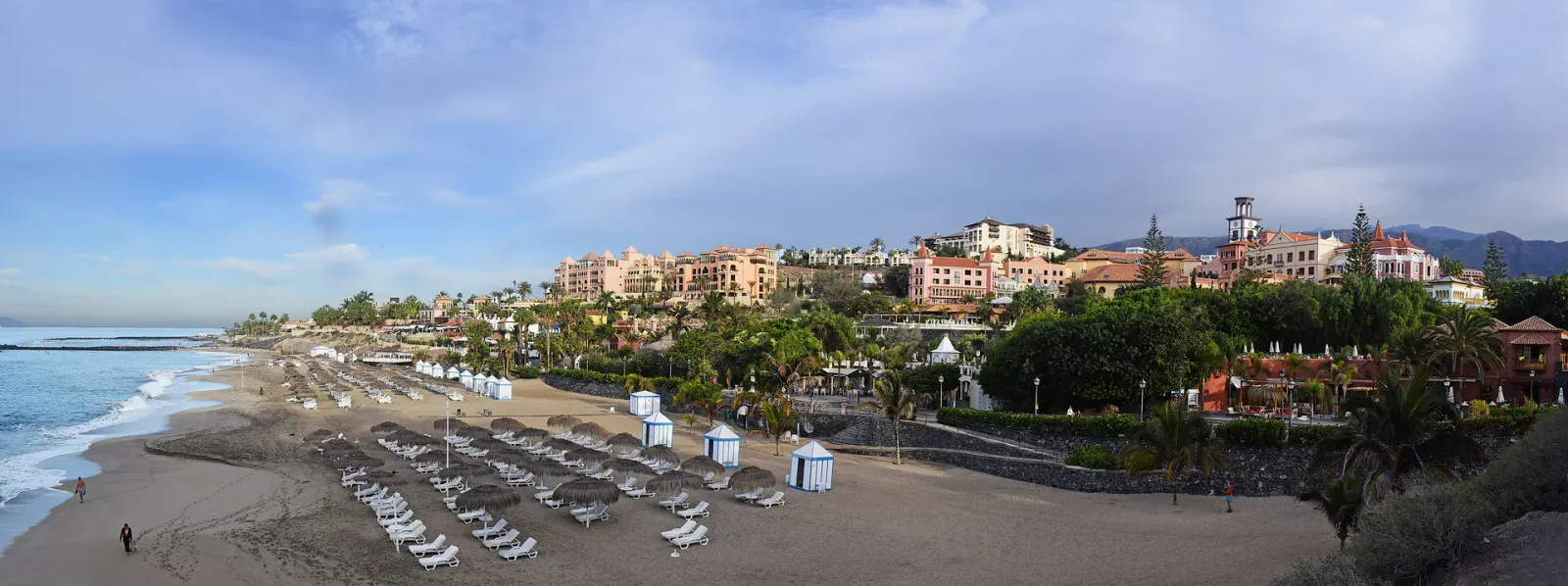
Playa del Duque in Costa Adeje: 390 m of Blue Flag sand, calm water, €20 sunbed sets