
The story
Overview
The Tenerife time difference is zero hours from the UK, Ireland and mainland Portugal all year round, one hour behind mainland Spain and Germany, and five hours ahead of New York for roughly 48 weeks of the year. The official Tenerife time zone is Western European Time (WET, UTC+0) from late October to late March and Western European Summer Time (WEST, UTC+1) from late March to late October. On phones, laptops and calendar apps, the IANA identifier for time in Tenerife, Canary Islands is Atlantic/Canary.
Spain’s official national timekeeper, the Real Instituto y Observatorio de la Armada (ROA) in San Fernando, maintains the legal clock for both mainland Spain and the archipelago. Because the Canary Islands sit far southwest of the Iberian Peninsula off the coast of Morocco (see Where Is Tenerife? Location, Map and Quick Facts), Tenerife stays permanently one hour behind Madrid and Barcelona.
Quick reference for Tenerife clocks (checked November 2026)
- Winter (late Oct to late Mar): WET, UTC+0 (same as GMT)
- Summer (late Mar to late Oct): WEST, UTC+1 (same as BST)
- IANA zone name:
Atlantic/Canary- Difference to UK, Ireland, Portugal: 0 hours all year
- Difference to mainland Spain, Germany, France, Italy: Tenerife is 1 hour behind all year
- Difference to US Eastern (New York): Tenerife is 5 hours ahead (4 hours during the March and October-November DST gap weeks)
- Clock changes: last Sunday of March (01:00 to 02:00) and last Sunday of October (02:00 to 01:00)
Travellers flying in from London, Dublin or Lisbon keep their watches untouched on arrival and departure, with no jet lag to manage. Arrivals from continental Europe gain an extra hour on landing day and give that hour back on the return flight. Visitors from North America cross five to eight time zones heading east, with two brief calendar windows in spring and autumn when Europe and the United States switch clocks on different Sundays.
Tenerife time difference by country and city
Tenerife shares its clock with Western Europe’s Atlantic coast and runs one hour behind Central Europe. Against destinations outside Europe, the gap stays fixed only where daylight saving either does not apply or follows the same European Sundays.
| Origin city or region | Zone in winter / summer | Tenerife compared to origin (standard) | Seasonal mismatch or notes |
|---|---|---|---|
| London, Manchester, Edinburgh (UK) | GMT (UTC+0) / BST (UTC+1) | Same time (0h) | Never shifts; both change at 01:00 UTC on the same Sundays |
| Dublin (Ireland) | GMT (UTC+0) / IST (UTC+1) | Same time (0h) | Same clock year-round |
| Lisbon, Madeira (Portugal) | WET (UTC+0) / WEST (UTC+1) | Same time (0h) | Azores are 1 hour behind Tenerife |
| Madrid, Barcelona, Palma (Spain) | CET (UTC+1) / CEST (UTC+2) | 1 hour behind (-1h) | Constant all year across mainland Spain and Balearic Islands |
| Berlin, Frankfurt, Munich (Germany) | CET (UTC+1) / CEST (UTC+2) | 1 hour behind (-1h) | Same 1-hour gap for France, Italy, Netherlands, Belgium, Austria, Switzerland |
| New York, Boston, Miami (US East) | EST (UTC-5) / EDT (UTC-4) | 5 hours ahead (+5h) | Shrinks to +4h for 2-3 weeks in March and 1 week in late Oct/early Nov |
| Chicago, Dallas (US Central) | CST (UTC-6) / CDT (UTC-5) | 6 hours ahead (+6h) | Shrinks to +5h during the same spring and autumn US DST gap weeks |
| Los Angeles, San Francisco (US West) | PST (UTC-8) / PDT (UTC-7) | 8 hours ahead (+8h) | Shrinks to +7h during the spring and autumn US DST gap weeks |
| Toronto (Canada) | EST (UTC-5) / EDT (UTC-4) | 5 hours ahead (+5h) | Follows the same March and November change dates as the US |
| Dubai (UAE) | GST (UTC+4) year-round | 4h behind in winter / 3h behind in summer | UAE has no daylight saving |
| Reykjavik (Iceland) | GMT (UTC+0) year-round | Same time in winter / 1h ahead in summer | Iceland stays on UTC+0 all year |
Why UK and European gaps never drift
Every European Union member state, along with the UK, Switzerland and Norway, switches clocks at the same instant: 01:00 UTC on the last Sunday of March and 01:00 UTC on the last Sunday of October. A 10:00 morning call in London is always 10:00 in Santa Cruz de Tenerife, and a 10:00 meeting in Berlin or Madrid is always 09:00 on the island.
Iceland is the one Western European exception. Because Reykjavik stays on UTC+0 all year, Tenerife matches Iceland from late October to late March and sits one hour ahead from late March to late October.
The two US daylight saving mismatch windows
The United States and most of Canada spring forward on the second Sunday of March and fall back on the first Sunday of November. Europe moves two to three weeks later in spring and one week earlier in autumn. During those overlap weeks, the gap between Tenerife and US cities shrinks by one hour:
- 8 March to 29 March 2026: the US switched to EDT/PDT while Tenerife remained on WET, leaving Tenerife 4 hours ahead of New York and 7 hours ahead of Los Angeles.
- 25 October to 1 November 2026: Tenerife returned to WET one week before the US ended daylight saving, again narrowing the gap to 4 hours for New York and 7 hours for Los Angeles.
- 14 March to 28 March 2027: two weeks at +4h to New York and +7h to Los Angeles.
- 31 October to 7 November 2027: one week at +4h to New York and +7h to Los Angeles.
For late-March or late-October calls, video meetings or transatlantic flights, assign Atlantic/Canary inside your calendar invite rather than writing a manual UTC offset. Calendar apps adjust automatically during the gap weeks, whereas mental maths routinely causes missed calls.
Daylight saving time in Tenerife and how it shifts sunsets
Tenerife observes European daylight saving time under Spain’s Real Decreto 236/2002, which brings EU Directive 2000/84/EC into Spanish law and is applied by Orden PCM/186/2022. The order sets the Canary Islands change at 01:00 in March and 02:00 in October. Clocks move forward one hour on the last Sunday of March and back one hour on the last Sunday of October.
Check the exact local hour of the switch if you travel on change-over weekend. Mainland Spain moves clocks at 02:00 in March and 03:00 in October, whereas the Canary Islands switch at 01:00 in March and 02:00 in October, so both happen at the same instant, 01:00 UTC. In October the clock rolls back from 02:00 to 01:00, giving nightlife areas such as Playa de las Americas, Santa Cruz and Puerto de la Cruz an extra trading hour. In March, the hour between 01:00 and 01:59 disappears completely, which affects early Sunday airport taxis, coaches and ferry check-ins.
| Year | Summer time starts (01:00 WET to 02:00 WEST) | Winter time returns (02:00 WEST to 01:00 WET) |
|---|---|---|
| 2026 | Sunday, 29 March 2026 | Sunday, 25 October 2026 |
| 2027 | Sunday, 28 March 2027 | Sunday, 31 October 2027 |
| 2028 | Sunday, 26 March 2028 | Sunday, 29 October 2028 |
| 2029 | Sunday, 25 March 2029 | Sunday, 28 October 2029 |
| 2030 | Sunday, 31 March 2030 | Sunday, 27 October 2030 |
| 2031 | Sunday, 30 March 2031 | Sunday, 26 October 2031 |
Spain’s Orden PCM/186/2022 published the five-year domestic schedule through October 2026, which regularly prompts headlines suggesting seasonal clock changes are ending. Real Decreto 236/2002 remains in force indefinitely until EU member states agree to amend Directive 2000/84/EC. The 2027 to 2031 dates in the table follow the same last-Sunday rule.
How the clock change affects your daily schedule
Because Tenerife sits at roughly 16.25 degrees west of the Greenwich meridian (about 65 minutes west in solar time), solar noon lands after 13:00 in winter and after 14:00 in summer. Both clock switches produce an abrupt one-hour shift in morning and evening light:
- 28 to 29 March 2026: sunrise jumped from 06:59 WET to 07:58 WEST, and sunset moved from 19:20 WET to 20:21 WEST. Early-morning hikers suddenly started in pre-dawn darkness at 07:30, while coastal restaurants gained an extra hour of warm evening sun.
- 24 to 25 October 2026: sunrise dropped from 08:11 WEST to 07:12 WET, and sunset fell from 19:27 WEST to 18:26 WET. Hikers starting Anaga or Teide ridge trails after 14:00 in late October get caught by dusk an hour earlier than the week before.
Sunrise and sunset times in Tenerife by season
At 28.5 degrees north latitude, Tenerife avoids the extreme winter darkness of northern Europe. On the shortest day of the year in December, Santa Cruz de Tenerife still gets 10 hours and 20 minutes of daylight, over two hours more than London or Berlin. On the longest day in June, daylight stretches to 13 hours and 57 minutes, shorter than a northern European midsummer evening because the island sits closer to the equator.
Sunrise and sunset figures for Santa Cruz de Tenerife (28.46 N, 16.25 W) show a steady seasonal rhythm across the year. Southwest coast resorts such as Costa Adeje, Playa San Juan and Los Gigantes sit roughly half a degree further west, pushing sunrise and sunset about two minutes later.
| Date (seasonal marker) | Active zone | Sunrise | Sunset | Daylight length | Practical impact on plans |
|---|---|---|---|---|---|
| 15 January (mid-winter) | WET (UTC+0) | 07:58 | 18:30 | 10h 32m | Bright beach afternoons until ~18:00; air cools quickly after dusk |
| 20 March (spring equinox) | WET (UTC+0) | 07:08 | 19:16 | 12h 08m | Early daylight for hiking before midday heat |
| 29 March (DST starts) | WEST (UTC+1) | 07:58 | 20:21 | 12h 23m | Darker 07:30 commutes; sunsets jump past 20:00 overnight |
| 21 June (summer solstice) | WEST (UTC+1) | 07:08 | 21:05 | 13h 57m | Peak evening light; latest sunsets (~21:06) run into late June |
| 22 September (autumn equinox) | WEST (UTC+1) | 07:53 | 20:01 | 12h 09m | Warm sea with 20:00 sunsets; comfortable late coastal swims |
| 25 October (DST ends) | WET (UTC+0) | 07:12 | 18:26 | 11h 14m | Brighter mornings; sunset drops before 18:30 overnight |
| 21 December (winter solstice) | WET (UTC+0) | 07:53 | 18:13 | 10h 20m | Shortest day of the year, still over 2 hours longer than London |
North coast, south coast and Teide elevation quirks
In mountainous parts of Tenerife, direct sunlight disappears well before astronomical sunset. In Puerto de la Cruz and across the Orotava Valley, afternoon trade-wind cloud (panza de burro) often screens the sun early, and steep valley walls in Masca or Anaga put trails in shadow 30 to 45 minutes ahead of coastal sunset. For an unobstructed ocean sunset looking toward La Gomera, Costa Adeje, La Caleta and Los Gigantes face straight west.
Inside Teide National Park (2,100 to 3,715 m), the high horizon holds light slightly longer, then temperatures drop sharply once twilight fades. Pack a fleece or light jacket even in July and August if you plan to stay past 20:30 for stargazing. For monthly air temperatures, rainfall and sea conditions alongside daylight hours, see Best Time to Visit Tenerife: Month by Month for Sun, Sea and Hiking.
Flight arrival time conversions for Tenerife
Airline tickets, boarding passes and airport monitors always display local time at the departure airport and local time at the arrival airport. Knowing how the clock shifts mid-flight keeps hotel transfers, car rental pickups and evening dining plans on track.
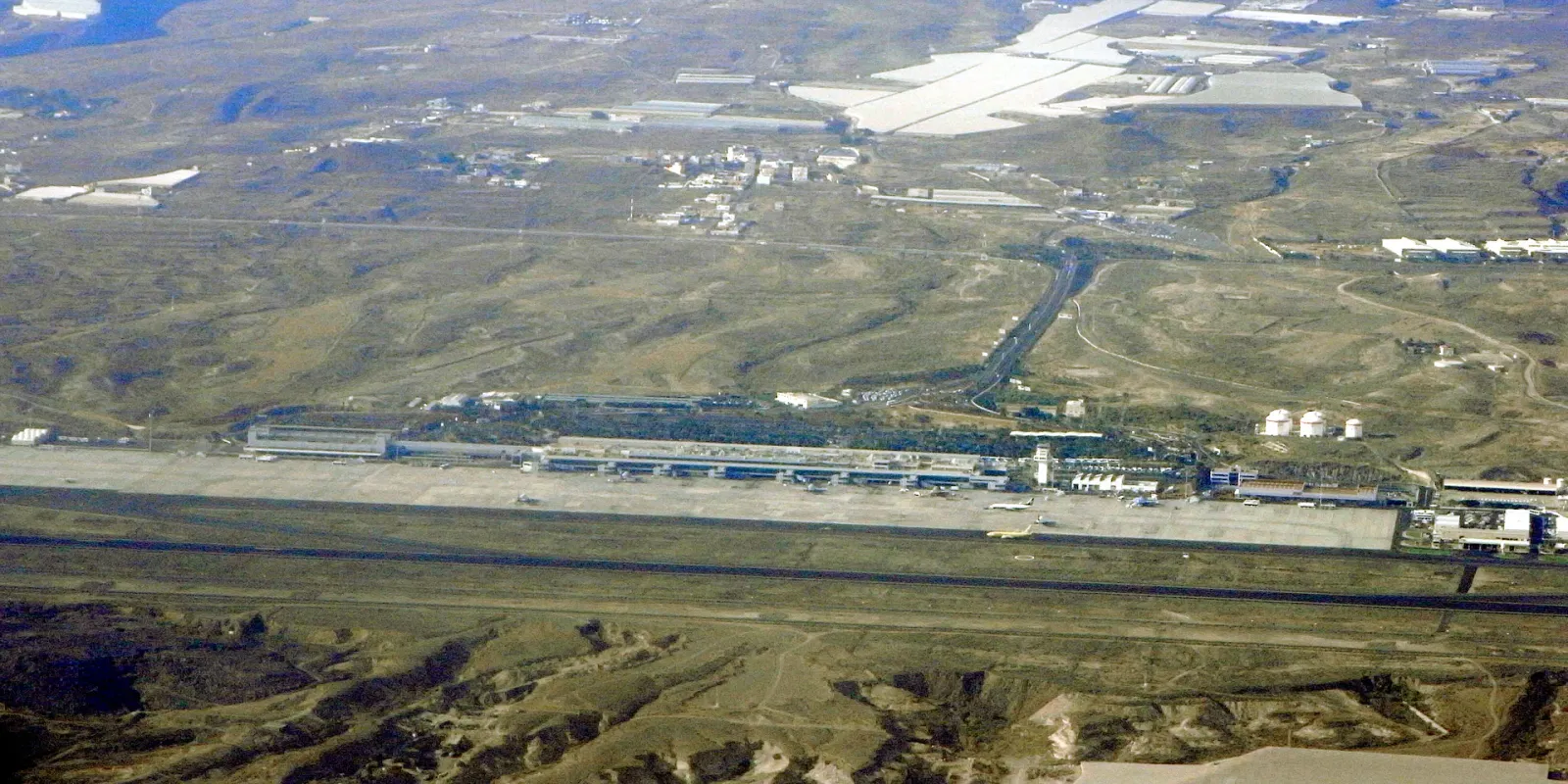
Tenerife South Airport (TFS, Reina Sofia) handles most international flights from the UK, Ireland, Germany and northern Europe, while Tenerife North Airport (TFN, Los Rodeos) handles dense domestic schedules from Madrid, Barcelona and inter-island hops. For airport transfer buses, taxi fares and ferry routes, read Getting to Tenerife: Flights, Airports and Ferries.
| Departure city | Typical flight duration | Clock change on arrival | Example departure (local) | Example arrival in Tenerife (local) | Return flight clock effect |
|---|---|---|---|---|---|
| London (LGW, STN, LHR, LTN) | ~4h 30m-4h 50m | 0 hours | 08:00 GMT/BST | ~12:40 WET/WEST | None (depart 13:30, land ~18:10 UK time) |
| Madrid (MAD) | ~2h 50m-3h 00m | -1 hour (gain 1h) | 10:00 CET/CEST | ~11:55 WET/WEST | Lose 1h going back (depart 10:00, land ~13:55 Madrid time) |
| Frankfurt (FRA) | ~4h 45m-4h 50m | -1 hour (gain 1h) | 09:00 CET/CEST | ~12:50 WET/WEST | Lose 1h going back (depart 14:00, land ~19:50 Frankfurt time) |
| New York (JFK/EWR via Madrid or London) | 10h+ with layover | +5h (+4h in DST gaps) | 18:00 EST/EDT | ~09:30-11:30 next day WET/WEST | Gain 5h flying west; usually lands same afternoon US time |
Practical traps on arrival and return days
Late landings from mainland Europe catch travellers off guard at car hire desks. A flight from Frankfurt touching down at TFS at 22:30 local time feels like 23:30 on your home clock. Always verify desk closing hours in local island time before booking a late arrival.
Return flights heading east to mainland Spain, Germany or France cost an extra hour on the clock on top of flying time. Leaving TFS at 19:30 for Frankfurt (around 4h 50m airborne plus the +1h shift) puts you on the ground near 01:20 the following morning, often after the last regional train leaves the airport.
Inter-island flights on Binter and Canaryfly never involve a clock change because all eight inhabited Canary Islands share Atlantic/Canary. From the US, plan on a connection through Madrid or London. When connecting via Madrid (MAD), remember the domestic leg crosses a time zone: a 14:00 Madrid departure landing at 15:55 in Tenerife takes nearly three hours in the air, even though the clock only advances by 1 hour 55 minutes.
Remote work and call planning from Tenerife
Tenerife works well for remote workers splitting time between European and North American clients because a single workday covers Central European mornings and US East Coast afternoons without pushing past 19:00.
Standard working hours in Tenerife line up cleanly across Europe and the Americas during the roughly 48 matched weeks of the year. During the two US DST mismatch windows (mid-March and late October/early November), move the US columns one hour later in US local time, so 14:00 in Tenerife matches 10:00 in New York instead of 09:00.
| Tenerife time (WET/WEST) | UK / Ireland / Portugal | Mainland Spain / Germany / France | New York (US East, standard) | Los Angeles (US West, standard) | Best use of slot |
|---|---|---|---|---|---|
| 08:00 | 08:00 | 09:00 | 03:00 | 00:00 | Early Central Europe standups |
| 09:00 | 09:00 | 10:00 | 04:00 | 01:00 | Core UK and EU morning overlap |
| 12:00 | 12:00 | 13:00 | 07:00 | 04:00 | Late EU calls before Spanish lunch |
| 14:00 | 14:00 | 15:00 | 09:00 | 06:00 | Prime EU and US East Coast overlap |
| 16:00 | 16:00 | 17:00 | 11:00 | 08:00 | UK/EU wrap-up and US West start |
| 17:00 | 17:00 | 18:00 | 12:00 | 09:00 | US East midday and US West morning |
| 19:00 | 19:00 | 20:00 | 14:00 | 11:00 | Late US West sync before Canarian dinner |
Local daily rhythm if you work from the island
Outside the main southern resort strips, towns like Santa Cruz, La Laguna, Puerto de la Cruz and the backstreets of Los Cristianos keep Spanish daytime hours shaped around late solar noon. Public offices, banks and small clinics handle most walk-in business between 09:00 and 13:30 or 14:00. Local restaurants fill up for lunch between 13:30 and 15:30, and smaller independent shops often close from around 13:30-14:00 until 16:30-17:00, while major supermarkets (Mercadona, HiperDino, Lidl) and resort areas stay open straight through.
Evening dining splits by neighbourhood. Beachfront spots in Costa Adeje and Playa de las Americas serve dinner from 18:00 onward, whereas local Canarian guachinches and town restaurants get busy between 20:00 and 22:00.
If you work US East Coast hours (14:00 to 22:00 local time), your mornings stay open for swimming, surfing or hiking before logging on at 14:00. If you work German or Madrid hours (08:00 to 16:00 local time), you still get over two hours of coastal daylight after work even in December. Before planning a longer remote-work stay, review Schengen day limits and entry rules in Do You Need a Visa for Tenerife? Entry Rules and Passport Basics.
Canary Islands vs mainland Spain: why Tenerife is one hour behind
Spanish television and national radio routinely attach the line una hora menos en Canarias (“one hour less in the Canary Islands”) to broadcast schedules. Two separate 20th-century decrees explain why the Tenerife, Spain time zone stays permanently behind Madrid.
First, when Spain adopted Greenwich Mean Time for the Iberian Peninsula and Balearic Islands starting 1 January 1901, the royal decree left out the Canary Islands. Until 1922 the islands kept local mean solar time.
Second, from 1 March 1922 the Canary Islands were placed on GMT-1 to match their Atlantic longitude around 16 degrees west. Mainland Spain stayed on GMT (UTC+0), creating the one-hour separation. On 16 March 1940, General Francisco Franco’s government advanced clocks across all of Spain by 60 minutes to match Central European Time. Mainland Spain moved from GMT to CET (UTC+1), while the Canary Islands moved from GMT-1 to GMT/WET (UTC+0), preserving the one-hour gap.
Geographically, Tenerife sits closer to the UTC-1 meridian (15 degrees west) than to Greenwich. Running on UTC+0 in winter and UTC+1 in summer puts solar noon past 13:00 in winter and past 14:00 in summer, which is why late December afternoons stay bright past 18:10.
Where the one-hour gap still trips travellers up
Spanish booking websites, airline apps, national rail portals and Madrid-based government offices default to hora peninsular (CET/CEST) unless a page specifically labels a time as hora canaria. Check which label applies before setting an alarm for timed ticket releases or administrative deadlines, for example for permit slots or national ministry deadlines.
Modern iOS and Android phones switch to Atlantic/Canary automatically as soon as airplane mode comes off at TFS or TFN. If your phone stays stuck on Madrid or Berlin time after landing, toggle “Set Automatically” off and back on under date-and-time settings. When combining Tenerife with a mainland stop such as Madrid or Seville on the same trip, double-check hotel check-in cutoffs and museum time slots on the mainland leg so the forward jump does not make you an hour late.
More guides
-
 Travel Guides
Do You Need a Visa for Tenerife? Entry Rules and Passport Basics
Do you need a visa for Tenerife?
-
 Travel Guides
Best Time to Visit Tenerife
Best time to visit Tenerife: May, June and September-October bring 24-28 C, warm seas and lower crowds
-
 Travel Guides
Itinerary Tenerife
Itinerary Tenerife: day-by-day plans for 3, 5 and 7 days, built around driving distances
-
 Travel Guides
Best Place to Stay in Tenerife
The best place to stay in Tenerife depends on your trip: Costa Adeje for beaches
-
 Travel Guides
Flight Time to Tenerife
Flight time to Tenerife from London is about 4h20-4h35 nonstop.